Cleaning Chemical Exposure and a Safer Home
That sharp scent after scrubbing a bathroom may feel like proof that the job was done. But cleaning chemical exposure can happen long after the spray bottle is put away, especially in small, poorly ventilated rooms where residue and fumes linger. For families, pet owners, and workplaces, a clean space should feel fresh and comfortable, not leave anyone coughing, dizzy, or worried about what is in the air.
A safer approach does not mean accepting lower cleaning standards. It means choosing products and methods that match the job, using them carefully, and avoiding the common habits that create unnecessary risk. Whether you clean your own home or manage an office, clinic, school, or rental property, a few practical changes can protect the people who use the space every day.
What Cleaning Chemical Exposure Can Look Like
Exposure is not always dramatic. It can occur when someone breathes in vapors from a spray, gets a concentrated product on their skin, touches a surface before it has dried, or accidentally transfers residue from their hands to their eyes or mouth. Children and pets are often closer to floors, upholstery, and low surfaces, so the products used there deserve extra thought.
Short-term symptoms can include eye, nose, or throat irritation; headaches; nausea; coughing; or skin redness. People with asthma, allergies, migraines, sensitive skin, or other respiratory concerns may notice problems sooner. Strong fragrance can also be uncomfortable for some people, even when a product is being used as directed.
The level of risk depends on the product, the amount used, the room’s ventilation, how often it is used, and the person exposed. A product that works well for a hard, infrequent cleaning task may not be the right choice for daily countertop wiping or floors where a baby crawls and a dog naps. “Natural” on a label is not an automatic guarantee of safety, either. Every product should be used according to its directions and stored responsibly.
Where Exposure Risk Often Builds Up
Cleaning products tend to become a problem through routine shortcuts rather than one single mistake. A little more product does not necessarily clean better, and using several products at once can create a much harsher indoor environment.
The highest-risk situations usually include the following:
- Mixing products, particularly bleach with ammonia, acids, or products with unknown ingredients. This can produce dangerous gases.
- Spraying cleaners in enclosed bathrooms, shower stalls, vehicles, or other areas with little airflow.
- Using concentrated products without measuring or diluting them as directed.
- Leaving products, refill bottles, pods, or disinfecting wipes within reach of children and pets.
- Applying heavy fragrance products to mask odors instead of removing the source of the odor.
Disinfectants deserve particular care. They can be useful when there is a specific sanitation need, such as illness in the household or a high-touch commercial area. But disinfecting every surface, every day, is not always necessary. Regular soil removal with an appropriate cleaner, clean tools, and good hand hygiene often handles everyday cleaning needs. When disinfection is appropriate, follow the label’s contact-time instructions. Wiping a product away immediately may reduce its effectiveness while still leaving behind residue.
Safer Habits That Still Deliver a Deep Clean
Start by cleaning with the least intensive product and method that will do the job. A microfiber cloth, warm water, and a suitable low-toxicity cleaner can remove a surprising amount of everyday soil from sealed surfaces. Mechanical action matters: wiping, agitating, and changing dirty cloths often make a bigger difference than reaching for a stronger chemical.
For tougher jobs, choose the product specifically made for the surface and soil you are addressing. Grease, mineral buildup, grout, soap scum, and germs are different problems. Treating them all with one harsh, all-purpose product can damage finishes and create avoidable exposure. For example, an acidic cleaner may help with hard-water deposits but is not appropriate for every stone surface. A degreaser may be useful in a kitchen but may need careful rinsing where food is prepared.
Ventilation is one of the simplest safety measures available. Open a window when weather permits, run the bathroom exhaust fan, turn on a range hood, or allow fresh air to circulate before and after a more intensive cleaning task. In Albuquerque and surrounding communities, dry air and dusty conditions can make a clean indoor environment feel especially valuable. Fresh airflow helps, but it does not make unsafe mixing or overuse safe.
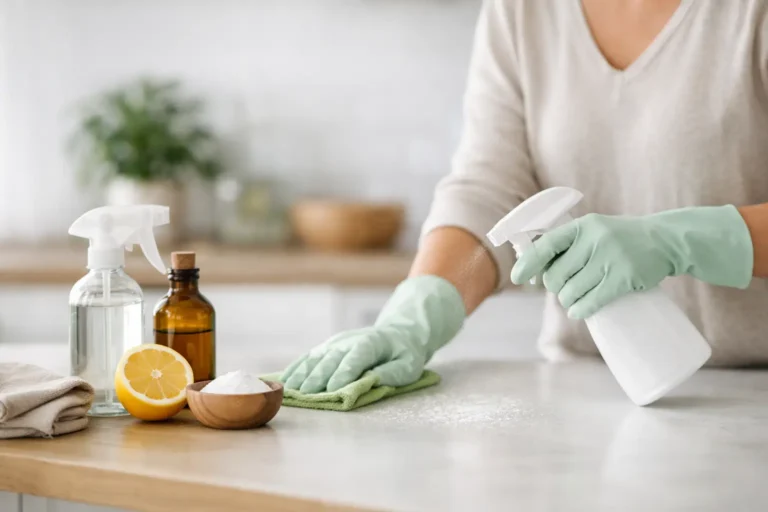
Use sprays thoughtfully. Spraying directly onto a cloth instead of into the air can reduce airborne mist for many routine tasks. Wear gloves when a product’s label recommends them or when you are working with concentrated cleaners. Then wash your hands after cleaning, even if gloves were used. Keep products in their original labeled containers, and never transfer them into a food or drink bottle.
Protecting Kids, Pets, and Sensitive Spaces
A home does not need to look like a laboratory to benefit from a more careful cleaning plan. The goal is to reduce needless residue and fumes in the areas where people spend the most time.
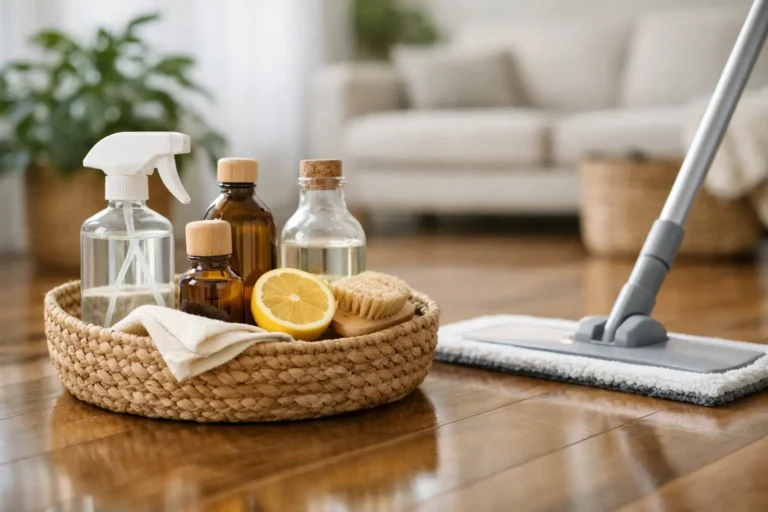
Prioritize floors, dining surfaces, kitchen counters, bathroom touchpoints, and frequently handled items such as doorknobs and light switches. Let surfaces dry fully before children or pets use them. If a pet walks through a recently cleaned area, remember that residue may end up on paws and later be licked. Keep litter boxes, pet bowls, toys, and bedding away from active cleaning products until the area has been cleaned and dried.
In workplaces, the same principle applies to employees and visitors. A dental office, medical clinic, school, car dealership, or professional office may have different sanitation needs, but nobody benefits from a lobby or restroom that smells overwhelmingly chemical-heavy. Select products and processes based on the space, use them correctly, and schedule stronger cleaning work when the area can be ventilated and has less foot traffic.
For people with known sensitivities, simplify the product lineup. Avoid adding fragranced sprays, plug-ins, and multiple specialty products on top of one another. Fewer products used well are generally easier to manage than a crowded cabinet of partially used bottles.
When to Get Help After an Exposure
If a cleaning product gets into someone’s eyes, flush with clean water right away and follow the product label’s first-aid directions. If it is swallowed, inhaled in a concentrated amount, or causes trouble breathing, severe coughing, chest tightness, confusion, fainting, or a significant burn, seek immediate medical help or contact Poison Control. Do not try to induce vomiting unless a medical professional tells you to do so.
For mild irritation, move to fresh air, rinse exposed skin, remove contaminated clothing, and stop using the product. Symptoms that continue, worsen, or concern you deserve medical guidance. Keep the container or a photo of its label available so a clinician or poison specialist can identify the ingredients.
A Cleaner Standard for Everyday Spaces
Healthy cleaning is not about chasing a completely sterile home or avoiding every product with a long name. It is about making informed choices: using the right amount, improving airflow, respecting label directions, and selecting cleaning methods that support the people and animals sharing the space.
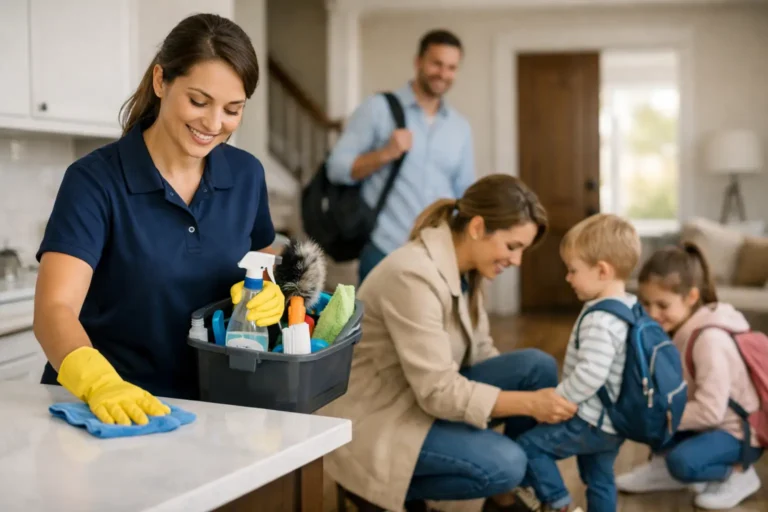
For busy households and local businesses, professional help can make that standard easier to maintain. Natures Cleaning Services uses plant-based, non-toxic solutions and thoughtful cleaning practices to deliver detailed results without asking clients to compromise their health for a clean home or workplace. The best clean is one you can see, feel, and breathe easily around.