Green Cleaning vs Traditional Cleaning Compared
That clean, sharp scent after a weekend scrub can feel reassuring. But for a parent with a crawling baby, a pet owner with paws on every floor, or an office manager responsible for employee comfort, the smell raises a fair question: what was left behind in the air? Green cleaning vs traditional cleaning is not simply a choice between natural and powerful. It is a decision about cleaning results, indoor air quality, daily exposure, and the kind of waste a home or workplace creates.
Both approaches can keep spaces looking presentable. The meaningful difference lies in the products, techniques, and priorities behind the clean.
What traditional cleaning usually means
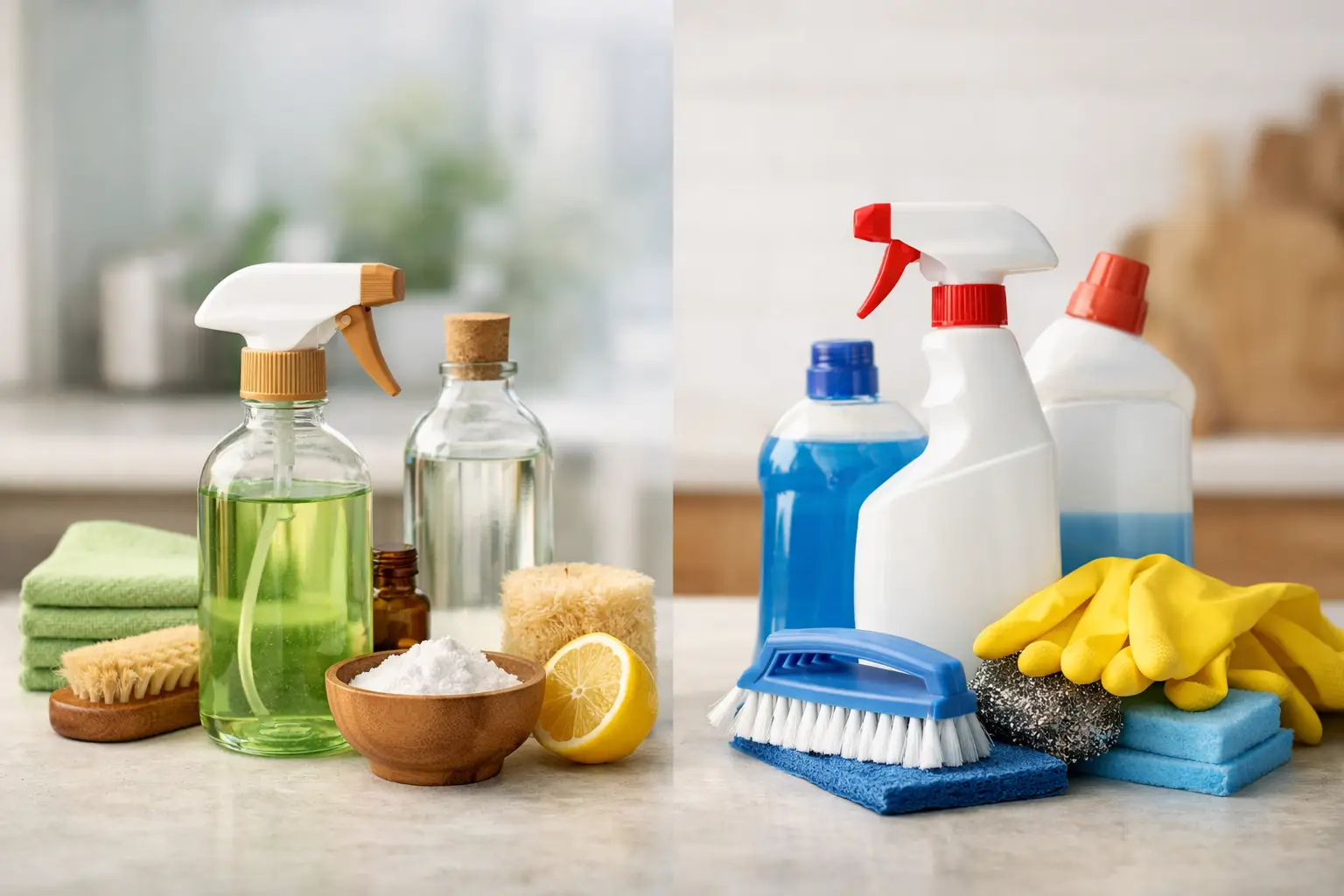
Traditional cleaning commonly relies on conventional chemical products designed to cut grease, remove stains, disinfect, deodorize, or create a visible shine. Many work quickly and are widely available, which is why they became the standard in homes, schools, offices, and commercial facilities.
The concern is not that every conventional product is automatically unsafe. Products have different ingredients, directions, and intended uses. The problem often appears when strong products are used too often, mixed incorrectly, applied in poorly ventilated areas, or chosen because their fragrance makes a room seem cleaner.
Some conventional cleaners may contain harsh solvents, artificial fragrances, bleach, ammonia, or volatile organic compounds. These ingredients can contribute to eye, skin, or throat irritation for sensitive people. They can also leave behind odors that are especially unpleasant for people with asthma, allergies, migraines, young children, pets, or chemical sensitivities.
Traditional cleaning also tends to encourage a one-product-for-every-problem mindset: a powerful spray for the kitchen, a heavy disinfectant for every surface, and a fragranced product to cover up lingering odors. That approach may be more chemical-heavy than the job requires.
How green cleaning works differently
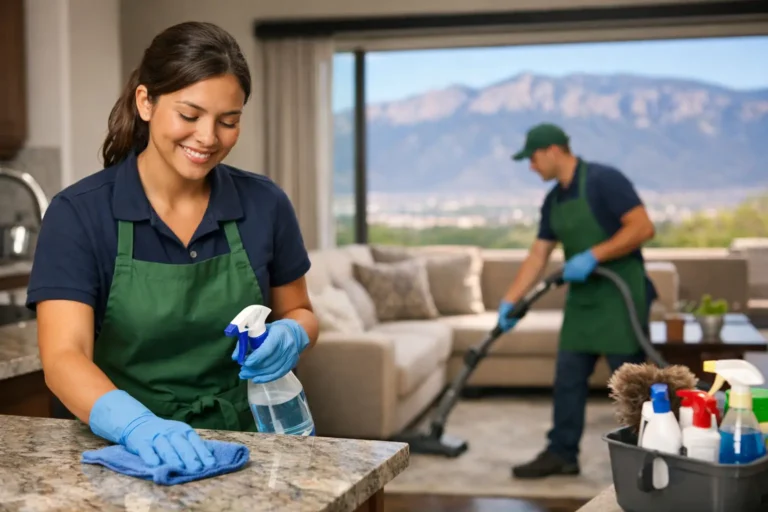
Green cleaning focuses on effective products and methods that reduce unnecessary exposure to harsh chemicals and limit environmental impact. At Natures Cleaning Services, that means using plant-based, non-toxic solutions selected to provide professional results while helping protect families, pets, employees, and New Mexico’s natural environment.
The word green should not mean weak. A thoughtfully chosen green cleaner can remove everyday soil, grease, fingerprints, soap buildup, and dust very well. Professional cleaning is about matching the right product, dwell time, tools, and technique to the surface, not simply reaching for the strongest-smelling bottle.
For example, microfiber cloths capture dust and debris more effectively than a dry paper towel, reducing product use and disposable waste. Proper vacuuming removes allergens from carpets and upholstery without relying on fragrances to make a room feel fresh. Regular cleaning also prevents buildup from becoming a difficult job that requires more aggressive treatment later.
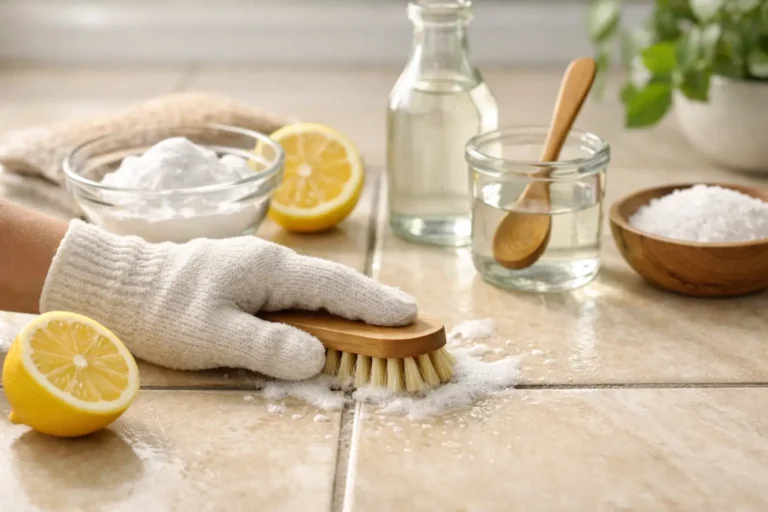
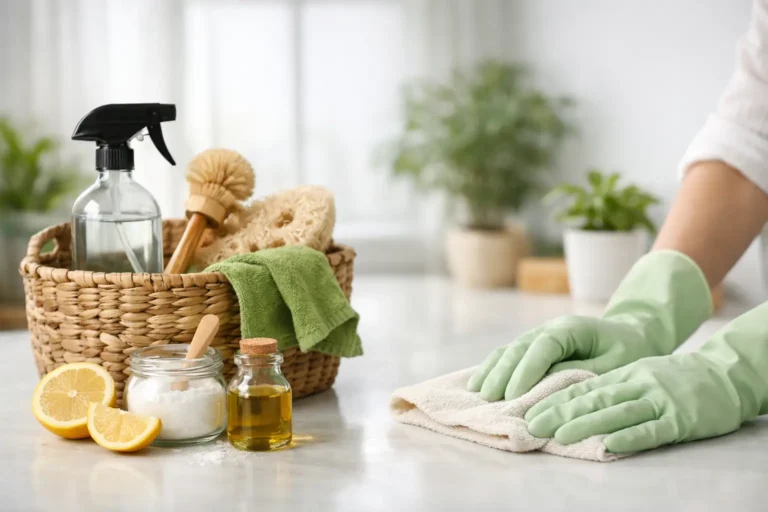
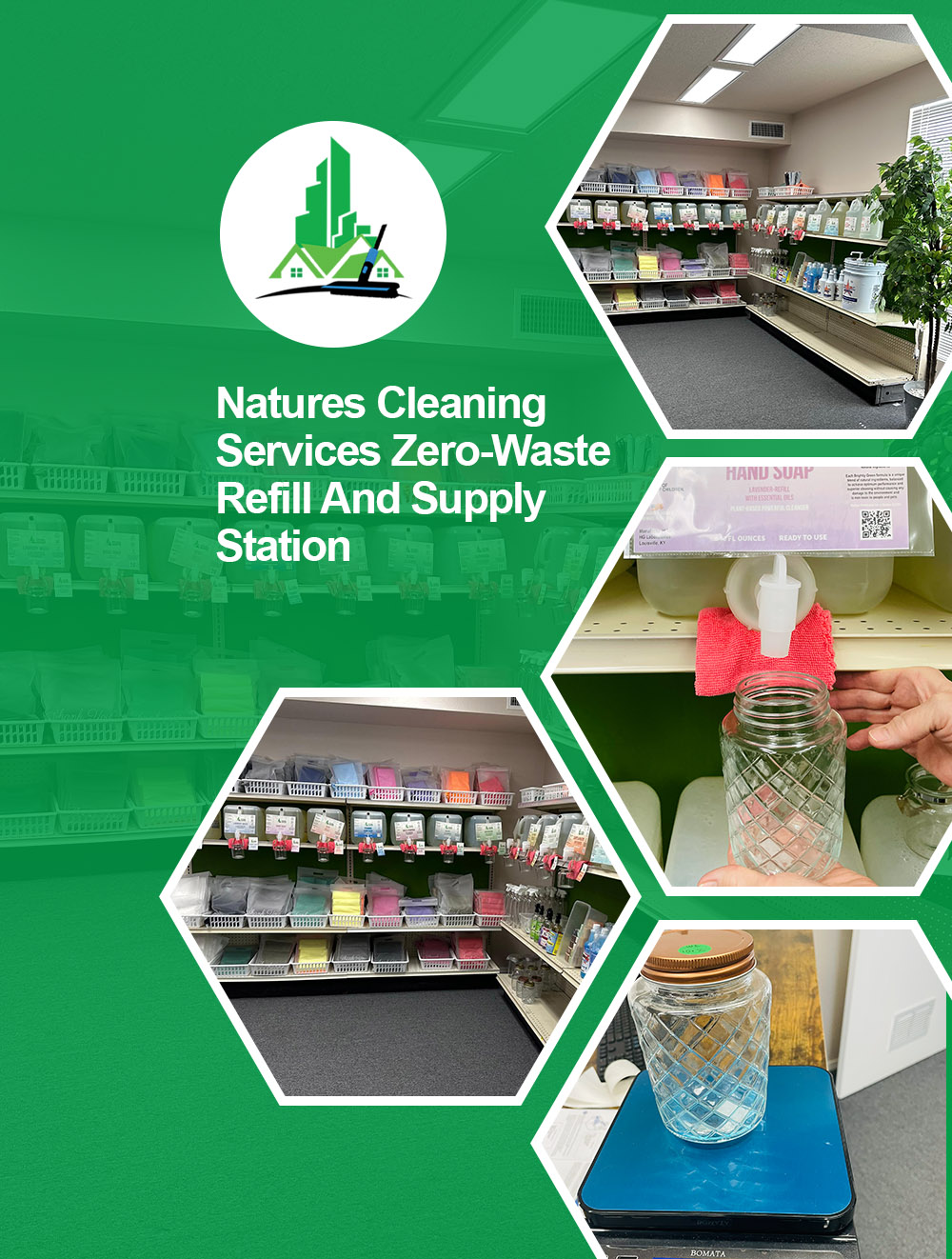
Green cleaning generally favors products with clearer ingredient standards, low-odor or fragrance-free options, reusable tools, concentrated formulas, refill systems, and responsible disposal practices. It also recognizes that reducing waste matters. A refill station and reusable containers can keep a steady stream of single-use plastic bottles out of the waste bin.
Green cleaning vs traditional cleaning: the real trade-offs
A fair comparison should acknowledge that every cleaning situation is different. Green cleaning is not about pretending that all stains, germs, or restoration needs are simple. Traditional cleaning products can be useful in specific circumstances, particularly when a facility must meet strict disinfection requirements or when a surface has an unusual contamination issue.
The best approach depends on the space, who uses it, the type of soil present, and the level of sanitation required. A medical clinic has different cleaning needs than a family living room. A move-out property with years of neglected grease needs a different plan than a regularly maintained kitchen.
Still, conventional products are often overused for routine tasks. A heavily fragranced cleaner is not necessary to wipe a desk. Bleach is not the right default solution for every bathroom surface. More chemical strength does not always mean more cleanliness, and it can damage finishes, discolor fabrics, or create irritating fumes.
Green cleaning may require more attention to process. Some products need a little time on the surface to work. Certain hard-water deposits, old grout stains, or deeply embedded odors may need specialized tools and repeated treatment rather than one harsh application. That is a trade-off worth making when the goal is a cleaner space without compromising the health of the people who spend time there.
The health difference is often felt indoors
Most people spend a large part of the day indoors, whether at home, school, a dental office, or a professional workplace. Indoor cleaning choices matter because residues and airborne particles do not stay confined to a spray bottle.
For households, the most common concern is everyday contact. Children play on floors, pets lick paws after walking through kitchens, and hands touch counters, doorknobs, tables, and bathroom fixtures throughout the day. Choosing gentler products for routine cleaning can lower the chance that these high-touch areas are coated with unnecessary chemical residue.
For businesses, the consideration is broader. Employees and clients may have allergies, asthma, or fragrance sensitivities that are not immediately visible. A clean office should support concentration and comfort, not fill meeting rooms with overpowering scents. In customer-facing spaces, a fresh environment comes from clean floors, dust-free surfaces, and well-maintained restrooms, not from masking odors.
Ventilation still matters with any cleaning product, including plant-based options. Natural does not mean a product should be sprayed carelessly or used without reading directions. Dependable cleaning means using products responsibly, protecting the people in the space, and treating every surface according to its needs.
Environmental impact goes beyond the bottle
A product label is only one part of the environmental picture. Consider how much packaging is used, how often products are replaced, whether cleaning tools are disposable, how much water is used, and what washes down the drain.
Traditional cleaning routines often rely on individually packaged sprays, disposable wipes, paper towels, and frequent replacement tools. Those choices are convenient, but they add up quickly in a busy household or commercial building. Green cleaning looks for practical ways to reduce that cycle through reusable microfiber cloths, refillable containers, durable equipment, and products designed to have a lower environmental impact.
This does not require perfection. Busy families and small business owners need cleaning systems that work in real life. The better goal is progress: fewer unnecessary bottles, fewer disposable wipes, less overuse of products, and more care in what enters local waterways and waste streams.
That mindset has particular value in communities that care deeply about preserving the landscapes, water, and open skies that make New Mexico home.
What to look for in a safer cleaning routine
Start by looking past marketing terms. Words such as natural, eco-friendly, and green are useful only when a company can explain what they mean in practice. Ask whether products are non-toxic, whether fragrances are used, how staff handle high-touch surfaces, and whether the cleaning plan can be adjusted for children, pets, employees, or sensitivities.
At home, consistency is one of the most effective ways to reduce the need for intensive products. Wipe up spills promptly, vacuum regularly, clean bathrooms before soap scum hardens, and give kitchen grease less time to build up. A recurring professional cleaning plan can help busy households stay ahead of the work without turning every visit into a major chemical-heavy reset.
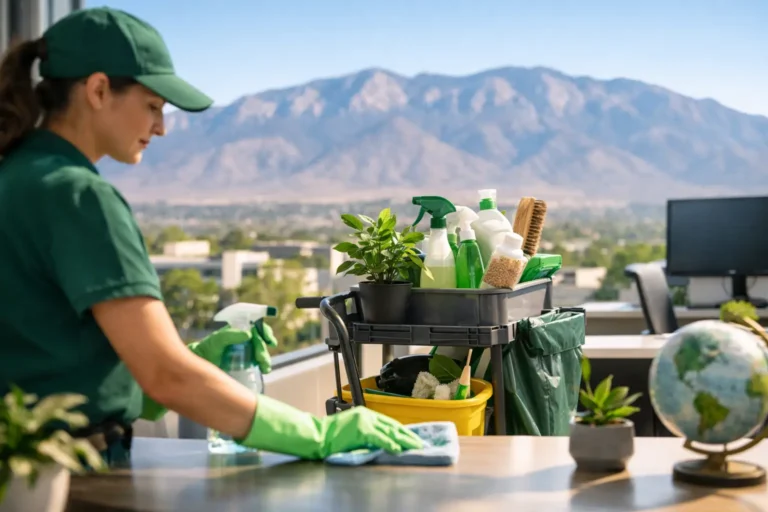
For commercial properties, choose a provider that understands the difference between routine cleaning and disinfection. Floors, restrooms, break rooms, lobbies, and workstations all need attention, but they do not all need the same solution. Customized janitorial service keeps cleaning focused, efficient, and appropriate for the facility.
A clean space should feel good to live and work in
The right cleaning choice does not ask you to accept less cleanliness for the sake of your values. It asks for a better definition of clean: surfaces that are genuinely cared for, air that does not feel heavy with fragrance, and a routine that respects the people and pets who share the space.
Whether you are maintaining a family home, preparing for a move, or caring for an Albuquerque-area workplace, choose cleaning practices that fit your real needs and your standards. A healthier clean is not an extra. It is part of making a space feel safe, welcoming, and ready for the people who depend on it.