Eco Cleaning for Medical Offices That Works
A medical office cannot afford a cleaning plan that only looks good at first glance. Patients notice odors, residue, and dusty corners. Staff notice skin irritation, headaches, and the way harsh products linger in treatment rooms long after the floors are dry. That is why eco cleaning for medical offices has become a practical priority, not a nice extra.
For clinics, dental practices, and outpatient spaces, the goal is simple but demanding – maintain a visibly clean, hygienic environment without adding unnecessary chemical load to the indoor air. The best eco-focused approach does not lower standards. It raises them by asking better questions about product safety, cleaning methods, patient comfort, and day-to-day consistency.
What eco cleaning for medical offices really means
Eco cleaning in a medical setting is not about swapping every conventional product for the gentlest option on the shelf and hoping for the best. Medical offices have real sanitation needs, high-touch surfaces, bodily fluid risks, and strict expectations for cleanliness. A responsible eco cleaning program respects those realities.
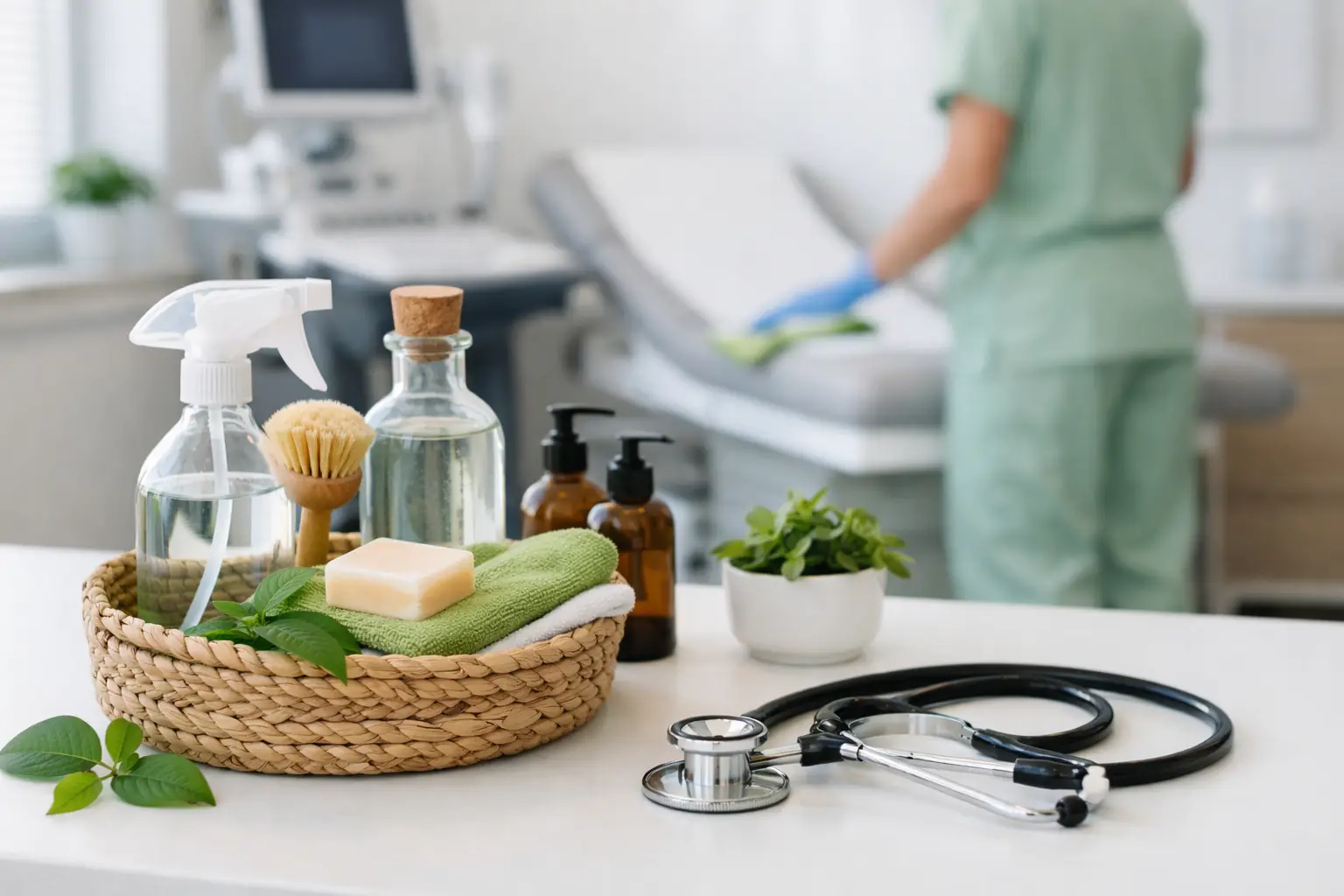
In practice, this means using safer, lower-toxicity products where appropriate, choosing plant-based or non-toxic cleaners for general soil removal, reducing unnecessary fragrance, and applying stronger disinfectants only when and where they are truly needed. It also means using tools and processes that improve results, such as color-coded microfiber, HEPA-filter vacuums, and clear protocols for exam rooms, waiting areas, restrooms, and front desks.
That balance matters. There is a difference between cleaning, sanitizing, and disinfecting, and a medical office often needs all three at different moments. Eco-minded service should never blur those lines.
Why medical offices are rethinking harsh chemicals
Many conventional cleaning products were designed with one primary goal – kill germs fast. That matters, but it is not the whole picture in a space where vulnerable people may be present all day. Strong chemical smells can trigger discomfort for patients already dealing with respiratory issues, chemotherapy side effects, migraines, pregnancy, or sensory sensitivity. Staff members may also face repeated exposure over months and years.
Indoor air quality is part of workplace health. When cleaning leaves behind heavy fumes or residues, the office may be technically clean while still feeling unpleasant. In a medical practice, that affects more than comfort. It shapes trust. Patients want to feel that the environment supports healing, not that it is loaded with irritants.
This is one reason more clinics in places like Albuquerque and surrounding communities are asking different questions about janitorial service. They still want dependable cleaning outcomes. They just do not want those results tied to avoidable exposure.
Where eco-friendly methods work best in a clinic
Not every area of a medical office has the same risk profile. That is why a good cleaning plan is layered instead of one-size-fits-all.
Waiting rooms, reception areas, offices, break rooms, and hallways are often strong candidates for plant-based, non-toxic routine cleaning products. These spaces need regular dust removal, floor care, fingerprint removal, restroom attention, and touchpoint cleaning, but they do not always require the most aggressive chemistry available.
Exam rooms and treatment rooms require more nuance. General cleaning can still be handled with safer products when removing dirt and residue from counters, floors, and noncritical surfaces. But when disinfection is required by protocol, symptom presentation, or known contamination, the cleaning team must use the correct product and dwell time. Eco-conscious cleaning should support compliance, not compete with it.
Restrooms are another place where product choice and process matter. A non-toxic cleaner may be perfect for mirrors, fixtures, and general maintenance. In higher-risk situations, targeted disinfection may still be necessary. The key is using the right level of chemistry for the actual need rather than overapplying strong products everywhere, every day.
The biggest mistake to avoid
The most common mistake in eco cleaning for medical offices is treating green cleaning like a marketing label instead of an operational standard. If the service provider cannot explain what products are used, how surfaces are cleaned, when disinfectants are applied, or how cross-contamination is prevented, the plan is incomplete.
Medical offices should expect documented routines and a team that understands sequence. Dirt must be removed before disinfectants can perform properly. High-touch surfaces need more frequent attention than low-touch areas. Mop heads and cloths should be changed often enough to avoid spreading contamination from room to room. Trash handling, restroom service, and floor care should follow a system, not guesswork.
An eco-friendly claim only has value when it is backed by disciplined cleaning practices.
How to choose an eco cleaning partner for a medical office
Start with questions about safety and consistency, not just price. A dependable provider should be able to explain which products are used for routine cleaning, which are reserved for disinfection, and how those choices protect both cleanliness and indoor air quality.
It also helps to ask how the team is trained. Medical offices move fast. Schedules change, patients run late, and room turnover can become rushed. A cleaning company needs processes that hold up even on busy days. That includes checklists, communication protocols, and clear quality standards.
Experience in commercial settings matters too. Cleaning a family home and cleaning a clinic are not the same assignment. Front-desk counters, waiting areas, staff stations, and exam rooms all have different needs. A provider should understand professional expectations, patient-facing presentation, and the importance of working quietly and respectfully around confidential, health-related spaces.
If your office is trying to support a broader wellness mission, product transparency is worth asking about. Fragrance-heavy products, aerosol sprays, and unnecessary chemical mixing can all work against a healthier environment. A thoughtful company will welcome those questions.
What staff and patients notice right away
People may not know the exact product used on a counter, but they notice the results. A clean medical office feels calm, orderly, and breathable. The floors do not have sticky residue. The restroom smells fresh instead of perfumed. Dust is not collecting on vents, baseboards, or waiting room furniture. Touchpoints feel clean without feeling greasy.
Staff usually notice operational benefits first. Lower-odor products can make end-of-day cleaning less disruptive. Thoughtful floor care can reduce slippery buildup. Consistent restroom and break room maintenance improves morale more than many office managers expect.
Patients notice the emotional side. A clean, low-odor environment signals care. It suggests that the practice pays attention to details that affect comfort and wellbeing. In healthcare settings, that perception matters.
Eco cleaning and compliance are not opposites
Some office managers worry that choosing greener cleaning means taking a softer approach than regulations or professional standards allow. In reality, the best systems are selective, not extreme.
Routine cleaning can often be handled with safer products and methods that reduce exposure for everyone in the building. Required disinfection can still be performed according to protocol in clinical spaces and contamination events. That is the practical middle ground.
The right provider will not promise that one plant-based spray solves every cleaning need in a medical office. Instead, they will build a plan that uses safer everyday products where possible and stronger interventions where necessary. That is how you protect health in the fullest sense.
A cleaner office should not come at the expense of health
Medical offices exist to support people who may already be stressed, symptomatic, or medically vulnerable. The environment should reflect that purpose. Cleanliness is part of care, but so is the quality of the air patients breathe and the residue staff touch every day.
For practices that want both high standards and a more responsible approach, eco cleaning is not about lowering expectations. It is about being more intentional with every product, tool, and routine. Natures Cleaning Services sees that balance as the standard worth aiming for – thorough cleaning that respects people as much as the surfaces being cleaned.
If your current setup leaves behind strong fumes, inconsistent results, or too many questions about what is being used in your space, that is usually a sign the plan needs work. A healthier medical office often starts with a better cleaning philosophy, carried out consistently, quietly, and with real care.