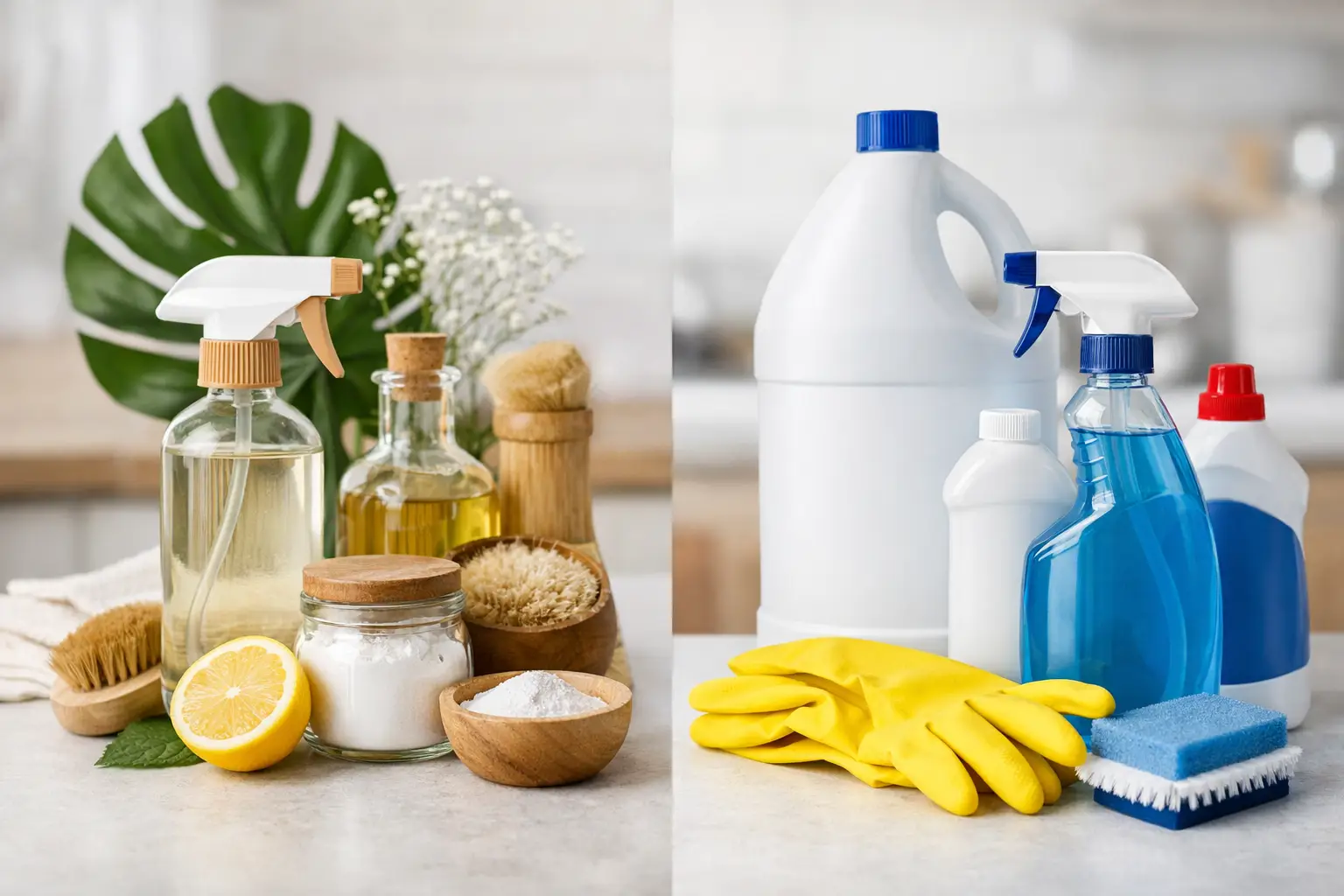
Natural Products vs Bleach Cleaners
That sharp bleach smell can make a room feel “clean” for a moment, but it also raises a fair question: when it comes to natural products vs bleach cleaners, are you getting a healthier clean or just a harsher one? For families with kids, pets, allergies, or busy workspaces, the answer matters more than marketing claims. A cleaner space should support health, not work against it.
What natural products vs bleach cleaners really means
This comparison is often framed too simply. People hear “natural” and assume weak. They hear “bleach” and assume powerful. Real cleaning is more nuanced than that.
Bleach is a disinfectant. Its main job is to kill certain germs on hard, non-porous surfaces when used correctly. It is not actually a great all-purpose cleaner on its own, especially when dirt, grease, soap scum, or organic buildup are still sitting on the surface. In many cases, the surface has to be cleaned first before bleach can disinfect effectively.
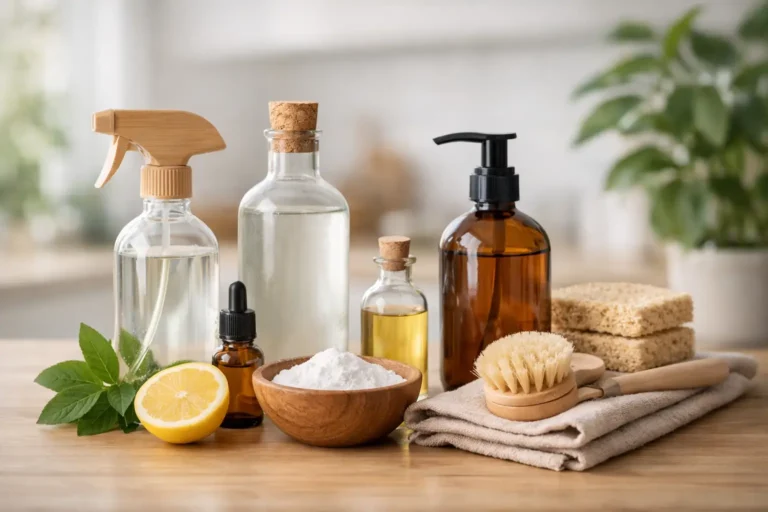
Natural or plant-based cleaners work differently. Instead of relying on a highly corrosive chemical to sanitize, they are usually designed to lift dirt, break down grease, remove residue, and leave spaces clean without heavy fumes. Some eco-conscious formulas also include ingredients that help reduce bacteria and odors, but their strength depends on the formulation and the purpose of the product.
So the real question is not which one sounds stronger. It is which one is right for the job, the people in the space, and the kind of result you actually need.
Cleaning power is not the same as disinfecting power
This is where many households and businesses get tripped up. A kitchen counter can look spotless and still need disinfecting after raw chicken. On the other hand, a bathroom sink covered in toothpaste, hard water spots, and grime needs cleaning first, not just a splash of bleach.
Bleach has a role in targeted disinfection. In certain situations, especially when there is a known contamination issue, it can be useful when properly diluted and applied according to label directions. But routine overuse is common. People often reach for bleach when what they really need is a product that removes buildup safely and thoroughly.
Plant-based cleaners can be excellent for day-to-day cleaning. They are often better at removing grease, fingerprints, food residue, dust, and general soil than people expect. For homes and offices that need consistent upkeep rather than emergency sanitation, this matters a lot. A safer cleaner that gets used correctly and regularly can produce better long-term results than a harsh product people avoid or misuse.
The health trade-offs are hard to ignore
Bleach is effective, but it comes with real drawbacks. Its fumes can irritate the eyes, skin, nose, and lungs. For people with asthma, sensitivities, or other respiratory concerns, that irritation can be more than a minor inconvenience. It can turn routine cleaning into something stressful.
This is one reason many families and businesses reconsider their approach. In homes with children and pets, surfaces are touched constantly. Floors matter too, especially when babies crawl or pets lie down right after cleaning. In workplaces, strong chemical odors can affect employees and clients, even when the space looks polished.
Natural and non-toxic cleaning products are often preferred because they reduce that chemical burden indoors. That does not mean every product labeled natural is automatically safe or effective. Ingredients and formulation still matter. But a well-chosen plant-based cleaner can provide a much more comfortable cleaning experience without leaving behind the harsh smell many people have learned to associate with “clean.”
A healthier indoor environment is not a luxury. It is part of what a clean space should deliver.
When bleach makes sense and when it does not
Bleach is not the enemy. It is a tool. Like any tool, problems start when it is used for everything.
There are situations where bleach may be appropriate, such as specific disinfection needs after illness, certain mold-related situations on suitable surfaces, or environments where strict sanitation protocols apply. Even then, proper ventilation, dilution, surface compatibility, and contact time all matter. Used incorrectly, bleach can damage surfaces, discolor fabrics, and create unsafe fumes, especially if mixed with other products.
For most recurring house cleaning and a large share of office cleaning, bleach is often unnecessary. Kitchen surfaces, bathroom fixtures, floors, dusting, glass, and general maintenance can usually be handled effectively with safer alternatives. If the goal is a consistently fresh, healthy space rather than occasional chemical shock treatment, plant-based products are often the better fit.
That balance is especially relevant in homes and businesses across dry, dusty areas like Albuquerque and surrounding communities, where routine buildup from dirt, wind, and daily traffic can require frequent cleaning. In those settings, using bleach as the default can create more irritation without solving the actual maintenance problem.
Surface safety matters more than many people realize
One overlooked part of natural products vs bleach cleaners is what repeated use does to the materials in your home or facility.
Bleach can be rough on grout, sealants, fabrics, finished wood, some metals, and certain stone surfaces. It may whiten stains in some cases, but it can also weaken or discolor materials over time. In bathrooms and kitchens, that can mean a surface looks better short term but wears down faster.
Many eco-friendly cleaners are gentler on the surfaces people invest in most. That includes tile, hardwood-adjacent finishes, counters, stainless steel, and other high-touch materials. Gentle does not mean ineffective. It means the product is designed to clean without causing avoidable damage.
This is especially important for recurring service. A single harsh cleaning may not seem like a big deal, but repeated exposure adds up. Protecting surfaces is part of protecting the value of a home or commercial property.
The environmental difference is real
The choice between bleach and natural cleaners does not stop at the front door. What goes down the drain and what gets used repeatedly in a community affects the bigger picture.
Bleach production, packaging, and disposal carry environmental impact. So does the routine use of products that release harsh compounds into indoor and outdoor spaces. By contrast, many plant-based cleaning systems are designed with biodegradability, reduced toxicity, and lower waste in mind.
For customers who care about New Mexico’s water, air, and natural landscape, this is not just a branding point. It is a practical way to align home and business habits with personal values. Choosing safer products for regular cleaning helps reduce unnecessary chemical exposure in the places people live and work every day.
Why professional results do not require harsh chemicals
A lot of people assume the strongest smell means the strongest clean. Professional cleaning tells a different story.
Results come from method as much as product. The right dwell time, agitation, microfiber use, product pairing, and surface-specific approach often matter more than whether a cleaner contains bleach. A trained team using quality plant-based products can clean kitchens, bathrooms, offices, floors, and shared spaces to a very high standard without filling the air with harsh fumes.
That is why many modern cleaning companies have moved away from chemical-heavy routines except where truly necessary. The goal is not to make a space smell aggressive. The goal is to remove buildup, reduce exposure risks, and leave behind a clean environment people can comfortably live and work in.
For busy households, that peace of mind matters. For workplaces, it matters even more. Staff, customers, patients, and visitors all notice how a space feels, not just how it looks.
How to choose the right option for your space
If you are deciding what belongs in your home or business, start with the actual need. If you need routine maintenance cleaning, safer plant-based products are often the best choice. If you need targeted disinfection after a specific health concern, bleach or another approved disinfectant may have a place.
It also helps to ask who uses the space. A home with toddlers and pets has different priorities than a warehouse restroom. A dental office has different requirements than a real estate office. One-size-fits-all cleaning rarely serves people well.
The best approach is usually thoughtful, not extreme. Use stronger disinfection only when the situation truly calls for it. For everything else, choose products and methods that support health, protect surfaces, and make regular cleaning sustainable.
At Natures Cleaning Services, that is the standard we believe more homes and businesses deserve. Clean should feel safe, dependable, and comfortable to live with.
The better question is not whether bleach is stronger. It is whether your space is being cleaned in a way that protects the people who use it every day.