Best Cleaning Routine for Pet Hair at Home
Pet hair has a way of appearing five minutes after you clean. It gathers along baseboards, clings to upholstery, settles into rugs, and rides on clothes from room to room. The best cleaning routine for pet hair is not about chasing every loose strand all day. It is a simple, repeatable system that removes hair before it builds up, while keeping your home comfortable for the people and animals who live there.
For busy households, the goal is realistic consistency. A few small habits during the week, paired with focused floor and furniture care, can make a noticeable difference without filling your weekend with chores. The right approach also protects indoor air quality and avoids leaving harsh chemical residues where paws, children, and bare feet spend time.
Start by Reducing Hair at the Source
A cleaner home begins with your pet’s coat. Regular brushing removes loose fur before it reaches your couch, carpets, vehicle, and bedding. How often depends on the breed, coat length, season, and your pet’s tolerance for grooming. Some short-haired pets shed steadily, while double-coated dogs may release large amounts of fur in spring and fall.
Brush outdoors when weather allows, or choose one easy-to-clean area indoors and place a washable towel beneath your pet. This keeps the grooming mess contained. Clean pet beds, blankets, and favorite throws weekly, since they collect hair faster than most household fabrics. Washing these items regularly also helps reduce pet odors without covering them with strong fragrances.
If shedding suddenly increases, your pet has irritated skin, or bald patches appear, speak with your veterinarian. Cleaning can manage normal shedding, but it cannot solve an underlying health concern.
Build the Best Cleaning Routine for Pet Hair
Pet hair is easier to remove when it has not had time to become woven into fabric or pushed under furniture. A good routine separates quick maintenance from deeper cleaning, so your home stays manageable even during a busy week.
Daily: Handle the high-traffic zones
Spend five to ten minutes on the spots where hair collects most visibly. For many homes, that means entryways, the living room, pet feeding areas, and the path between your pet’s bed and favorite window. Use a microfiber dust mop, dry reusable floor pad, or vacuum designed for hard floors to pick up loose hair.
A microfiber cloth works well for tables, low shelves, window ledges, and baseboards. The fibers create light static that grabs hair rather than simply moving it around. Slightly dampening the cloth can help on stubborn surfaces, but do not soak it. Too much moisture can turn hair into little clumps that stick to the floor.
Before leaving the house, take a lint brush or reusable pet-hair tool over the sofa cushions and your clothing. This small habit keeps hair from traveling to the office, school, or car.
Two or three times a week: Vacuum with intention
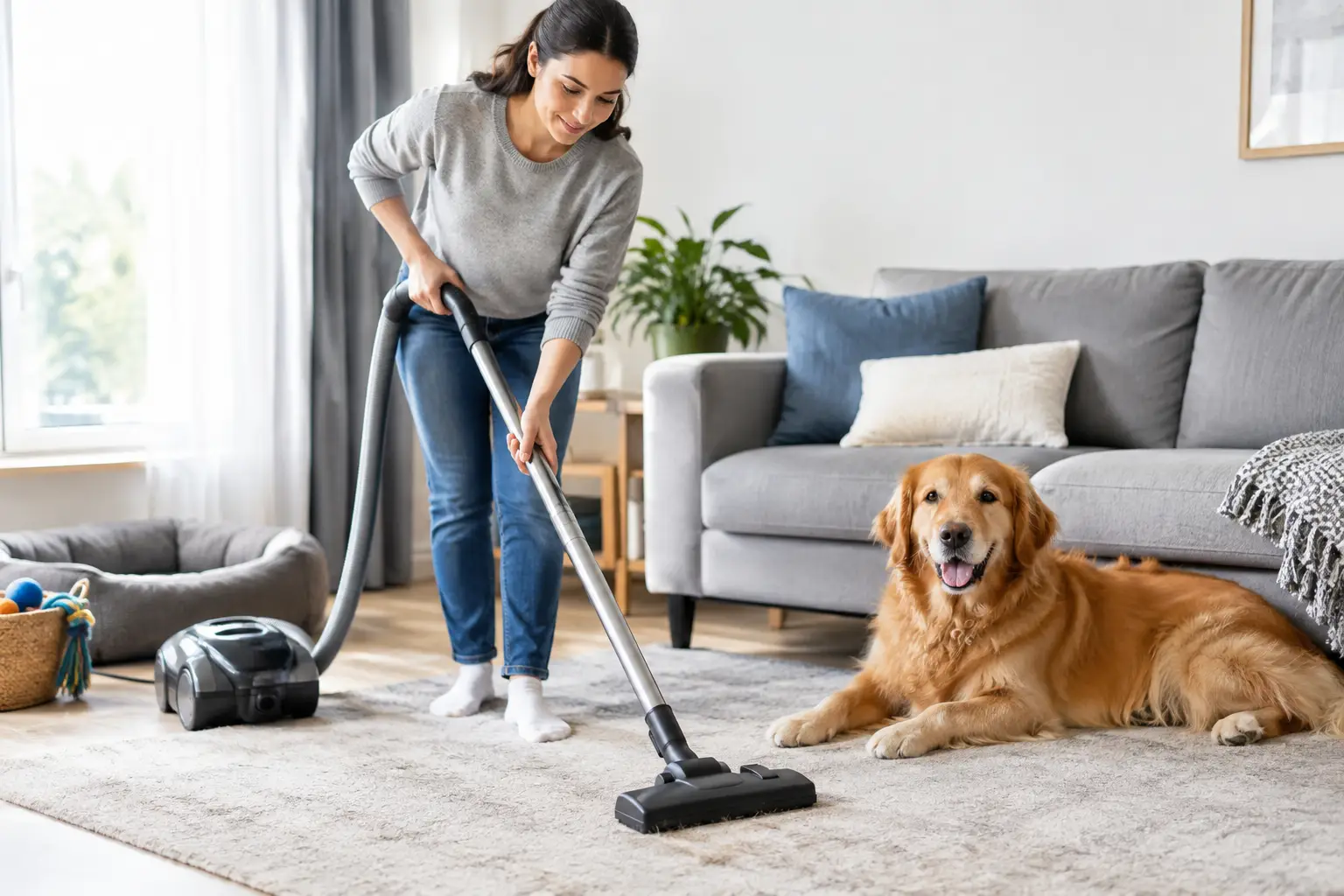
Vacuuming is the foundation of most pet-hair routines, but technique matters. Move slowly enough for the vacuum to lift hair from carpet fibers instead of skimming across the surface. In carpeted areas, make overlapping passes in more than one direction. Hair often lies flat in the direction your pet walks or rests, and changing directions helps release it.
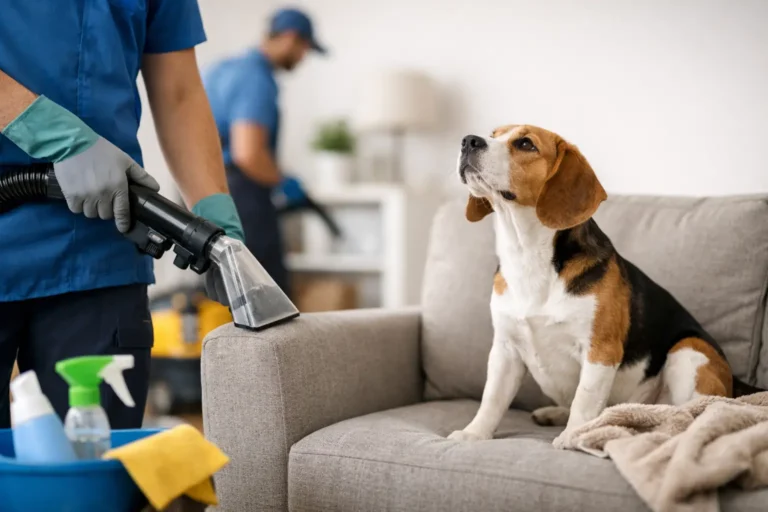
Use the upholstery attachment on sofas, chairs, stairs, and fabric headboards. Remove cushions when possible and vacuum beneath them, along seams, and under furniture edges. Those overlooked areas can hold surprising amounts of fur, dander, crumbs, and dust.
Empty the vacuum bin or replace the bag before it becomes overly full. A clogged filter or packed canister reduces suction and can send fine dust back into the room. Clean or replace filters according to the manufacturer’s instructions, especially in homes with multiple pets.
Weekly: Wash, mop, and reset the soft surfaces
After vacuuming, mop hard floors with a pet-safe, plant-based cleaner that leaves no heavy residue. Floors in kitchens, mudrooms, and living areas need special attention because pet hair combines with tracked-in dirt and can collect in corners. Use only enough cleaning solution to lift grime. Oversaturating floors can leave streaks, affect certain finishes, or create a slippery surface for pets.
Wash pet bedding, blankets, and washable slipcovers. Shake them outdoors first if possible, then remove hair with a lint brush or rubber glove before placing them in the washer. Check care labels, and clean your washing machine filter or drum afterward if loose hair is a frequent issue.
For upholstery that cannot be washed, use a rubber pet-hair brush, a dry sponge, or a slightly damp rubber glove. Sweep in one direction until the hair gathers into a ball, then pick it up by hand. This low-waste method is often more effective than repeatedly peeling through disposable lint sheets.
Monthly: Reach the places hair hides
Once a month, move lightweight furniture and clean under sofas, beds, and side tables. Vacuum floor vents, clean baseboards, and wipe the lower sections of walls where pets rub against them. If pet hair is constantly floating through the room, inspect air returns and replace HVAC filters as recommended for your system.
This is also a good time to deep-clean rugs and carpeted rooms. Vacuum thoroughly first, then address spots, pet odors, or embedded hair with the appropriate method for the material. Steam cleaning and professional carpet care can be helpful for high-use areas, but they work best when loose hair has been removed first.
Choose Tools That Fit Your Floors and Furniture
The most expensive tool is not always the best choice. What matters is whether it works with your home, flooring, and pet’s coat. A vacuum with a motorized brush can pull hair from carpet, while a soft roller or hard-floor setting is gentler on wood, tile, and luxury vinyl. If you have both carpet and hard flooring, a vacuum with easily changed attachments can save time.
For quick pickups, microfiber mops and reusable cloths are reliable choices. A rubber broom is useful for pulling hair from low-pile rugs and carpet, especially before vacuuming. Small handheld tools can make upholstery maintenance less of a project, but they are best for touch-ups rather than cleaning an entire room.
Avoid relying solely on fragranced sprays to make a pet area seem clean. Fragrance may mask odor temporarily, but it does not remove hair, dander, or the soil that causes lingering smells. Choose products formulated to be safer around pets, and give cleaned surfaces time to dry before your pet returns to them.
Adjust the Routine During New Mexico Shedding Seasons
In Albuquerque, Corrales, and surrounding communities, dry conditions can make pet hair cling to carpets, fabrics, and hard surfaces through static. During heavier shedding periods, add one extra vacuum session each week and brush your pet more often. A humidifier may reduce static indoors during particularly dry months, although it should be maintained carefully to prevent moisture problems.
Homes with desert dust, open windows, or active dogs also benefit from placing washable mats at entrances and wiping paws after walks. Less dust and debris coming inside means pet hair is less likely to form stubborn tumbleweeds along the walls.
For households with allergies, frequent vacuuming with a properly maintained filtered vacuum can help reduce dander alongside hair. Still, no cleaning schedule can eliminate allergens completely. Washable textiles, clean bedding, regular filter changes, and fewer fabric clutter zones can make the home easier to maintain.
Know When It Is Time for Extra Help
Sometimes the problem is not a lack of effort. A demanding work schedule, a new puppy, multiple pets, seasonal shedding, or a move can put regular cleaning out of reach. Deep cleaning is especially useful when hair has settled behind furniture, inside carpet edges, or into grout lines and overlooked corners.
Natures Cleaning Services uses plant-based, non-toxic solutions to help families maintain healthier homes without compromising the well-being of pets or the environment. A customized recurring plan can keep the routine moving during the weeks when life gets full, while one-time deep cleaning can help restore a home that needs a fresh start.
A home shared with pets will never be completely hair-free, and it does not need to be. With a steady routine, the right tools, and safer cleaning choices, it can feel fresh, cared for, and ready for the people and animals who make it home.