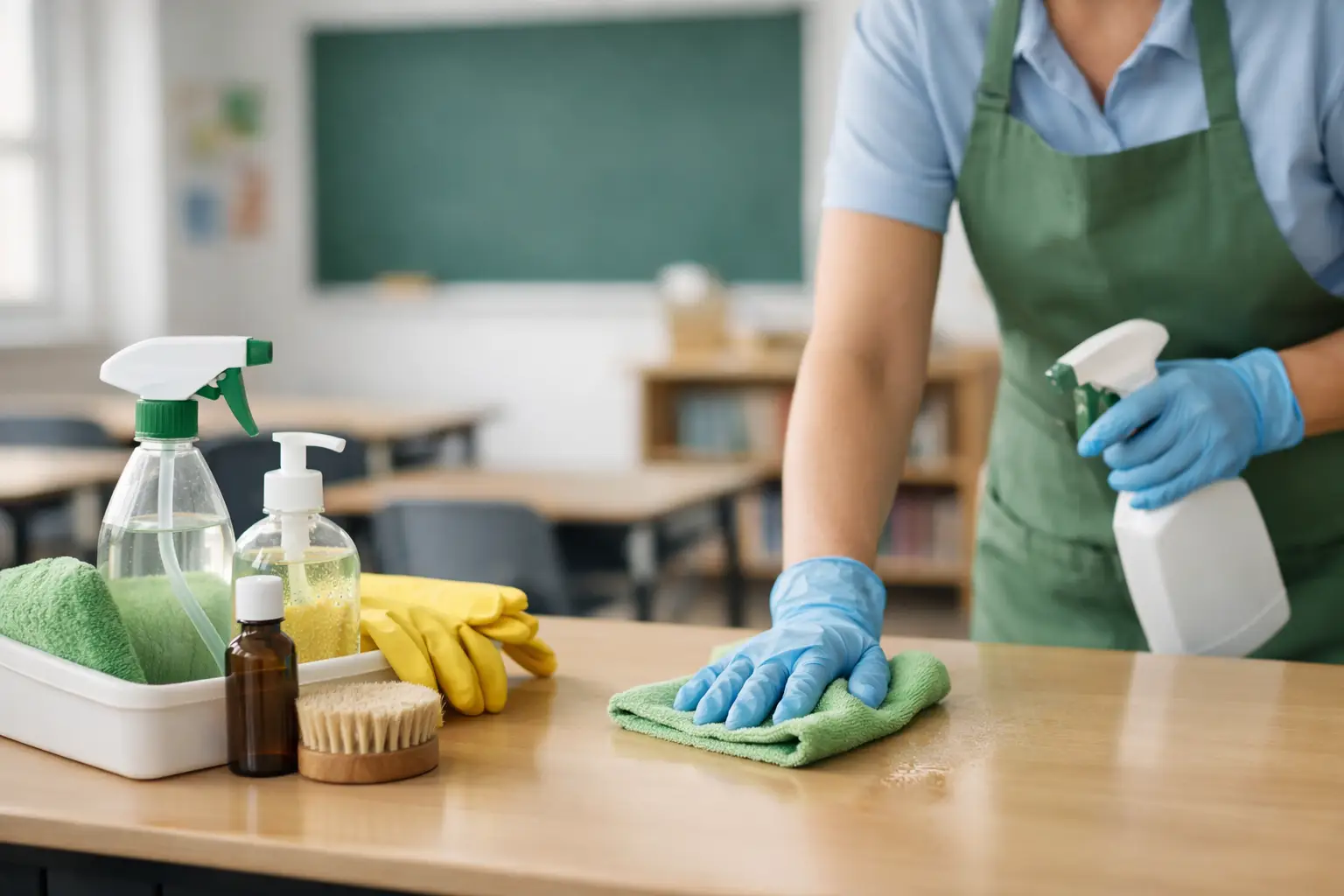
School Cleaning With Safe Products That Works
A classroom can look clean at first glance and still leave behind the things that matter most: residue on shared desks, odors in restrooms, dust near air vents, and harsh chemical fumes that distract students and staff. School cleaning with safe products is about more than choosing a pleasant-smelling spray. It is a practical way to support a healthier learning environment without compromising the thorough results a busy campus requires.
For school leaders, facility managers, and families, the goal is clear: keep classrooms, offices, cafeterias, restrooms, and common spaces consistently clean while reducing unnecessary exposure to harsh ingredients. That takes a thoughtful product plan, trained cleaning practices, and routines that match the way a school actually operates.
Why safer school cleaning matters
Students spend a significant part of their day indoors. Teachers, office staff, custodians, visitors, and after-school program teams do too. When cleaning products leave strong fumes or residues behind, those exposures can become part of the daily environment, especially in smaller rooms, restrooms, and spaces with limited ventilation.
This does not mean a school must choose between health-conscious cleaning and a sanitary facility. It means choosing products for the job, using them correctly, and avoiding stronger chemicals when they do not add a meaningful benefit. A well-maintained school should feel fresh and cared for, not smell heavily fragranced or chemical-heavy.
Safer cleaning also supports the people doing the work. Custodial teams and cleaning professionals handle products every day. Plant-based and non-toxic options, when selected and used appropriately, can help reduce exposure to irritating fumes and residues while still handling everyday soil, fingerprints, food messes, and restroom buildup.
What school cleaning with safe products should include
“Safe” can be an overly broad label, so it helps to look beyond marketing claims. A responsible school cleaning program uses products with clearly disclosed ingredients and instructions, avoids unnecessary fragrances and harsh solvents, and stores every product securely. Products should be selected for the specific surface and cleaning task rather than used as a one-size-fits-all solution.
For everyday cleaning, low-residue cleaners are often effective for desks, tables, floors, counters, glass, and many shared surfaces. The right product should lift dirt and grime without leaving a sticky film that attracts more dust. This is especially valuable in classrooms, where surfaces are touched constantly and cleaning needs to be reliable from one school day to the next.
Disinfecting is a separate step from cleaning. Cleaning removes visible soil and many germs from a surface. Disinfecting is used when a situation calls for reducing germs on a surface, such as during illness concerns, in restrooms, or on frequently touched areas. A disinfectant must be used according to its label directions, including the required contact time. Spraying and immediately wiping a product away may not deliver the intended result.
The practical balance is to clean routinely, disinfect strategically, and never assume more product is better. Overusing disinfectants can leave residues, affect indoor air quality, and create unnecessary work without improving outcomes.
Focus on the places students touch most
A school cleaning plan should reflect real traffic patterns. Classrooms, hallways, staff rooms, entryways, cafeterias, gyms, and restrooms each need different attention. A daily program generally prioritizes four areas: high-touch points such as door handles and light switches, restroom fixtures and floors, food-service surfaces, and shared classroom equipment.
High-touch surfaces deserve consistent attention, but they should not take focus away from the basics. Clean floors reduce tracked-in dirt and allergens. Well-maintained restrooms support dignity and comfort. Dusting ledges, vents, and window sills helps prevent buildup that is easy to miss during a rushed walkthrough.
Build routines around the school day
The most effective cleaning plan is not necessarily the most complicated one. It is the one that staff can follow consistently. Daily service may include restrooms, trash removal, floor care, touchpoint cleaning, and wiping desks or counters as needed. Weekly and periodic tasks can handle deeper floor care, detailed dusting, grout maintenance, interior glass, and areas behind or beneath furniture.
Timing matters. Cleaning teams need access to spaces without disrupting instruction, testing, meal service, or student activities. In many schools, that means a combination of after-hours detailed cleaning and daytime support for spills, restroom checks, and urgent needs. A customized schedule is more dependable than a generic checklist because it accounts for enrollment, building layout, event schedules, and the age of the students.
For example, an elementary classroom may need extra attention on shared tables, cubbies, and floor spots after art or snack time. A high school may require more frequent service around locker rooms, science rooms, athletic areas, and high-traffic entry points. A small private school may benefit from flexible service that increases before events or during cold and flu season.
Reduce cross-contamination through process
Safe products work best when the cleaning process is safe too. Color-coded microfiber cloths and mop heads can help prevent a cloth used in a restroom from being used on classroom surfaces. Clean tools should be laundered or replaced regularly, not simply carried from room to room. Vacuum equipment should be maintained so it collects dust effectively rather than recirculating it.
Product dilution is another detail that makes a difference. Concentrated cleaners can be economical and reduce packaging waste, but only when they are mixed accurately. Too little product may not clean effectively; too much can leave residue and increase cost. Clear labels, staff training, and secure storage make these routines easier to maintain.
Do not overlook indoor air and floor care
A fresh school is not defined by fragrance. In fact, strong scents can be a concern for people with asthma, allergies, migraines, or chemical sensitivities. Good ventilation, regular dust removal, prompt trash service, and properly cleaned restrooms do more to create a pleasant environment than masking odors with perfume.
Floors also deserve special attention. They carry in New Mexico dust, soil, moisture, food debris, and everything tracked through a busy campus. Regular vacuuming or sweeping, followed by appropriate mopping, protects both appearance and longevity. Different floor types need different methods. A product or tool that works well on tile may not be appropriate for sealed concrete, luxury vinyl, carpet, or gym flooring.
This is where professional judgment matters. Deep cleaning can restore neglected floors and grout, but aggressive chemicals or overly wet methods may damage surfaces or create slip risks. The right approach depends on the material, condition, traffic level, and manufacturer recommendations.
Choosing a cleaning partner for a school
Schools need consistency, accountability, and clear communication. When evaluating a cleaning provider, ask how they select products, train team members, prevent cross-contamination, and respond to spills or illness-related concerns. It is also reasonable to ask whether service plans can be adjusted for school breaks, special events, enrollment changes, or seasonal needs.
A dependable partner should be willing to walk the facility, identify priorities, and create a schedule that fits the campus instead of forcing the campus into a standard package. They should also understand that safer cleaning is not a shortcut. It requires the right products, enough dwell time when disinfection is needed, clean equipment, and careful attention to detail.
For schools in Albuquerque, Rio Rancho, and surrounding communities, Natures Cleaning Services brings that same care to educational and commercial spaces that it brings to homes and workplaces: thorough cleaning with a commitment to healthier indoor environments and New Mexico’s natural beauty.
A clean school sends a quiet but powerful message to every student, educator, and parent who walks through the door: this space is cared for, the people in it matter, and health never has to be traded for cleanliness.