Office Disinfection Without Harsh Chemicals
A clean office should not leave behind a sharp chemical smell, irritated eyes, or concerns about what employees are breathing all day. Office disinfection without harsh chemicals is possible when cleaning is approached as a thoughtful system, not a quick spray-and-wipe routine. The goal is a workplace that looks professional, supports employee wellness, and gives clients confidence from the moment they walk in.
For Albuquerque-area offices, that also means accounting for dry conditions, dust, high-touch shared spaces, and the different needs of a busy professional office, school, dental practice, clinic, or dealership. A safer approach does not mean lowering the standard of clean. It means choosing the right products, processes, and schedule for the space.
Cleaning and disinfection are not the same job
The terms are often used interchangeably, but they solve different problems. Cleaning removes visible soil, dust, crumbs, oils, and many germs from a surface. Disinfection uses an appropriate product to kill or deactivate certain germs listed on that product’s label. Both matter, and cleaning should generally happen before disinfection.
A desk covered in dust or a breakroom counter with food residue cannot be effectively disinfected by simply spraying over the mess. Soil can block the disinfectant from reaching the surface, and it may prevent the product from working as intended. Thorough cleaning creates the foundation for effective disinfection.
This distinction is especially useful for office managers trying to make responsible decisions. Not every surface needs disinfectant every day. Floors, walls, low-touch shelves, and decorative items often need routine cleaning, while shared touchpoints may need more frequent attention. Using disinfectant everywhere, all the time can add unnecessary product exposure without making the office meaningfully safer.
Where thoughtful disinfection matters most
A practical office plan starts with how people actually use the building. The highest-priority areas tend to be the places many hands touch throughout the day, particularly during cold and flu season or after an illness has been reported.
Common high-touch points include:
- Door handles, push plates, reception counters, and elevator buttons
- Shared keyboards, phones, copier controls, and conference room remotes
- Breakroom tables, refrigerator handles, faucet handles, and microwave buttons
- Restroom fixtures, stall latches, soap dispensers, and light switches
These areas deserve focused cleaning and, when appropriate, disinfection. Meanwhile, a customized plan can account for the realities of your workplace. A dental office or medical clinic may need more structured protocols than a small accounting office. A car dealership may need frequent attention in waiting areas, restrooms, and sales desks because of constant visitor traffic. A school office may require extra service around shared staff spaces and entrances.
What “without harsh chemicals” should mean
A healthier cleaning program is not about making vague promises or treating every natural ingredient as a disinfectant. It is about reducing unnecessary harsh chemical use while still using products correctly when true disinfection is needed.
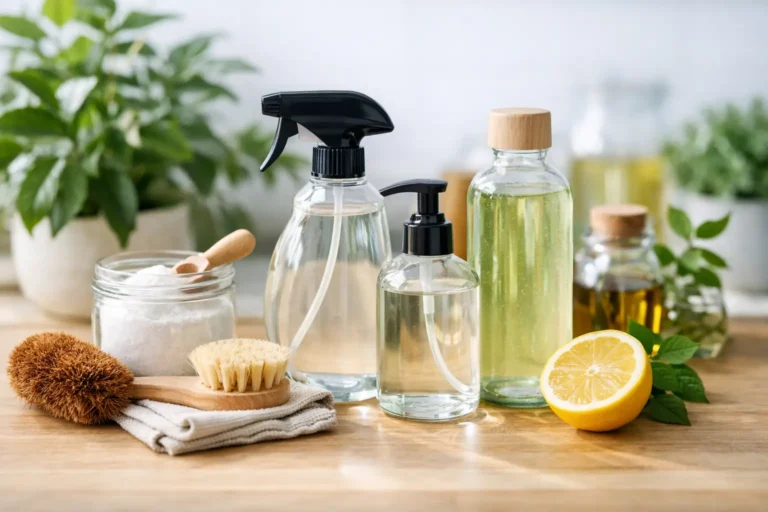
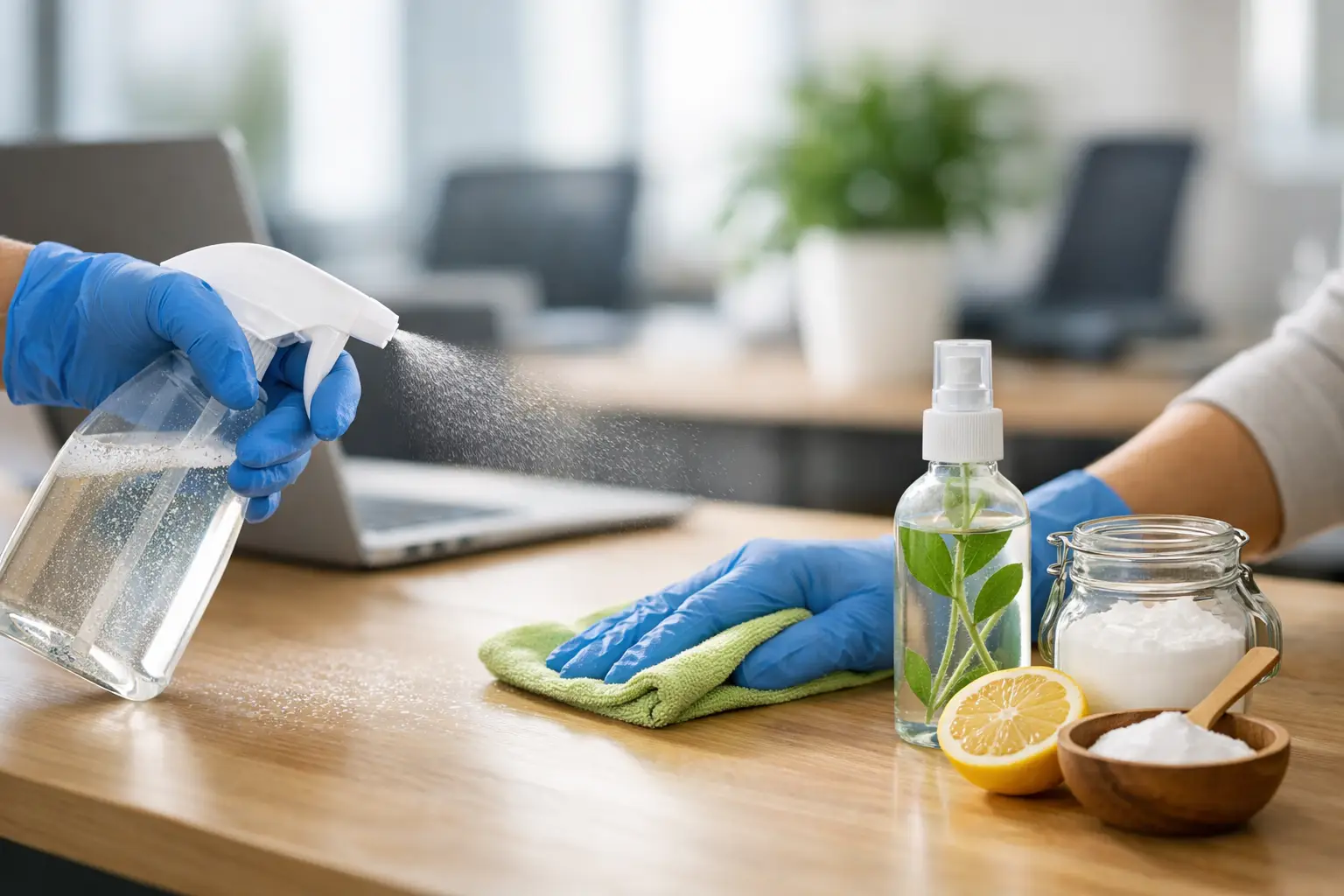
For routine office cleaning, plant-based and non-toxic solutions can effectively handle everyday dust, fingerprints, dirt, grease, and odors. Microfiber cloths and mops also make a meaningful difference because their fibers pick up and hold particles rather than simply moving them around. Good tools, proper dilution, and trained cleaning techniques can reduce the need for stronger products in the first place.
When a surface needs disinfection, the product should be selected for the specific setting and used exactly as directed. Look for a disinfectant with an EPA registration appropriate for the germs and surfaces involved. Follow label directions for dilution, ventilation, protective equipment, and contact time – the amount of time a surface must remain visibly wet for the product to work.
That last detail is often missed. Wiping a disinfectant off immediately may leave a surface smelling clean, but it may not provide the level of disinfection the label claims. Professional service is valuable because consistency matters as much as the product itself.
A safer approach protects indoor air, too
Office cleanliness affects more than countertops. Strong fragrances, aerosol sprays, and chemical residues can be uncomfortable for employees with asthma, allergies, migraines, or chemical sensitivities. In a shared workplace, one person’s preferred “clean scent” can be another person’s headache.
Choosing lower-odor, thoughtfully formulated cleaning products can help create a more comfortable environment for everyone. This is particularly relevant in offices with limited ventilation, smaller exam rooms, employee breakrooms, or spaces where visitors sit for long periods.
There is a trade-off to consider. Fragrance-free or low-odor products may not deliver the familiar smell people associate with cleaning. That is not a drawback when the space is truly clean. A professional workplace should smell neutral and fresh, not like it is masking yesterday’s mess with perfume.
Ventilation also plays a role. Opening doors when conditions allow, maintaining HVAC filters, and avoiding unnecessary spray products can support better indoor air quality alongside routine cleaning. A cleaning plan works best when it supports the whole environment, not just what is visible on a tabletop.
Build an office schedule around risk, not habit
Many businesses schedule cleaning based on what has always been done: a quick nightly pass, a weekly wipe-down, or extra service only when the office starts to look untidy. A better plan considers occupancy, visitor volume, shared equipment, and the type of work performed in the building.
For example, a low-traffic office with assigned desks may need detailed disinfection of shared areas a few times each week, paired with regular cleaning. A high-traffic reception area may need high-touch points addressed daily or more than once a day. During periods of increased illness, it can make sense to temporarily increase service rather than permanently applying disinfectant to every surface.
Restrooms and breakrooms should receive particular attention because moisture, food handling, and frequent use create different cleaning needs. Floors also matter. Dirt carried in from parking lots and entryways can quickly spread through a building, especially in New Mexico’s dry, dusty conditions. Routine floor care protects the appearance of the office while reducing the particles that settle on desks and shared surfaces.
Common mistakes that undermine good intentions
Trying to use fewer harsh chemicals can backfire when the process is incomplete. Skipping cleaning before disinfection, using too little product, or ignoring contact time can leave employees with a false sense of security. So can relying on homemade mixtures for commercial disinfection. Ingredients such as vinegar may be useful for limited household cleaning tasks, but they are not a substitute for an EPA-registered disinfectant when a facility needs verified germ control.
Another common mistake is mixing cleaning products. Combining chemicals can create harmful fumes or reduce product effectiveness. Even products marketed as green should be used according to their labels and stored safely away from food, staff belongings, and public areas.
Finally, avoid one-size-fits-all service. An office with carpet, hard floors, glass entry doors, patient rooms, or high-end finishes needs a plan that protects those materials. The wrong product can damage flooring, leave streaks on glass, or dull surfaces over time.
Why professional consistency makes a difference
A dependable cleaning team brings structure to a task that is easy to rush. That includes using appropriate products, working from cleaner areas toward dirtier ones, changing cloths between spaces to reduce cross-contamination, and paying attention to the overlooked details employees notice every day.
At Natures Cleaning Services, safer cleaning is part of the standard, not an afterthought. Customized commercial cleaning plans can combine plant-based routine cleaning with responsible disinfection practices for the areas that need it most. The result is a workplace cared for with employees, visitors, pets, and New Mexico’s environment in mind.
A healthier office does not need to announce itself with chemical fumes. It shows up in clear desks, cared-for restrooms, cleaner shared spaces, and the quiet confidence that your team can get back to work in a space that supports them.