How to Remove Hard Water Stains Naturally
Those cloudy spots on shower doors, white crust around faucets, and dull rings in the toilet are not necessarily signs that your home is dirty. They are mineral deposits left behind when water evaporates. In New Mexico, where hard water is common, knowing how to remove hard water stains naturally can make regular cleaning easier without bringing harsh fumes or chemical residue into your home.
The key is to treat the minerals before they build into a stubborn, cement-like layer. Gentle, plant-conscious ingredients can be highly effective when they are used on the right surface, given enough contact time, and followed by consistent upkeep. Don’t compromise your health for a clean home – use methods that protect the people, pets, and places you care about.
Why hard water stains keep coming back
Hard water contains dissolved minerals, primarily calcium and magnesium. Water looks clear coming from the tap, but when it dries on glass, chrome, porcelain, or tile, those minerals stay behind. Over time, they create the chalky white film, yellowish scale, or gray haze many homeowners notice in bathrooms and kitchens.
Soap residue can make the problem look worse. Minerals react with soap and body oils, creating a sticky film that clings to shower walls and fixtures. This is why simply spraying and wiping often does not work. The surface may look better while wet, then reveal the same cloudy deposits after it dries.
The most effective natural approach combines a mild acid to loosen mineral scale with gentle agitation to lift it away. Prevention matters, too. A two-minute wipe-down after a shower can save much more intensive cleaning later.
What to use to remove hard water stains naturally
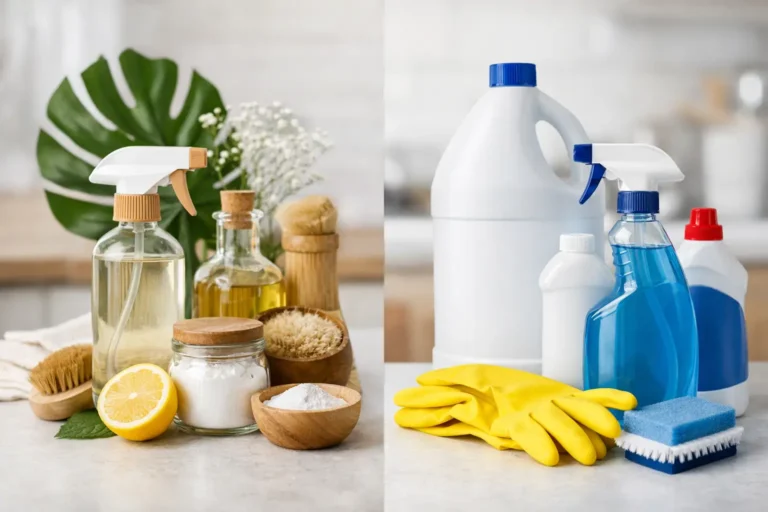
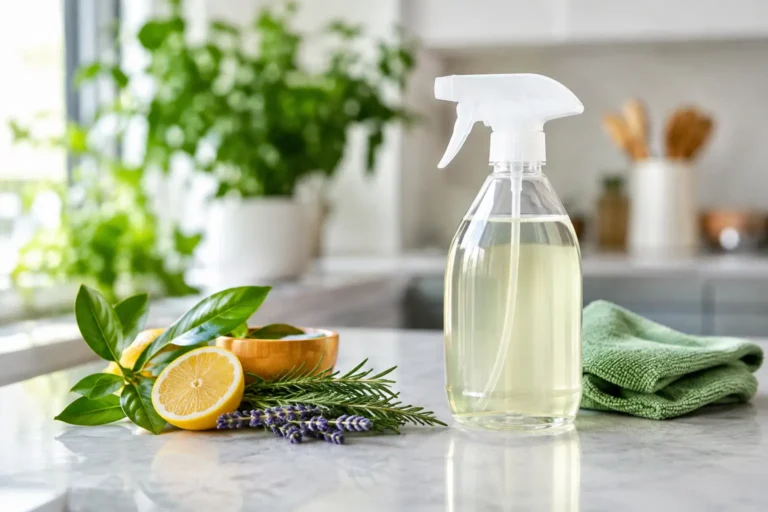
White distilled vinegar is a practical first choice for many hard-water jobs. Its mild acidity helps dissolve mineral deposits on glass, chrome fixtures, sealed ceramic tile, and porcelain. Citric acid, commonly sold as a powder, works similarly and can be a good option for people who dislike the smell of vinegar.
Baking soda has a different role. It does not dissolve mineral deposits as effectively as vinegar or citric acid, but its light abrasive texture can help loosen softened buildup. Use it sparingly and gently, especially on polished finishes.
A simple cleaning cloth, soft sponge, non-scratch scrub pad, old toothbrush, and spray bottle will handle most household stains. For more established scale, patience is usually more valuable than scrubbing harder. Aggressive scouring can scratch glass, dull chrome, and wear down protective finishes.
A note about vinegar and stone
Natural does not automatically mean safe for every surface. Never use vinegar or citric acid on marble, travertine, limestone, terrazzo, or other natural stone. Acid can etch the surface, leaving dull marks that look worse than the original stain. It can also damage some unsealed grout, metal finishes, and specialty coatings.
If you are unsure what your countertop, tile, or fixture is made of, test any solution in a hidden area first. For stone, use a pH-neutral cleaner and a soft cloth instead.
Remove hard water stains from shower glass
A cloudy shower door is often one of the most frustrating places to clean because the stains are visible from across the room. Start by warming the glass with shower water. This helps loosen surface residue.
Fill a spray bottle with equal parts white vinegar and warm water. Spray the glass generously, focusing on the bottom edges and areas where water dries most often. Let it sit for 10 to 15 minutes, but do not allow it to dry completely.
Wipe with a damp microfiber cloth or non-scratch sponge using overlapping strokes. If spots remain, make a thin paste of baking soda and water, apply it lightly to the affected area, and rub gently. Rinse thoroughly, then dry the glass with a clean microfiber towel. Drying is not an optional final touch – it prevents fresh minerals from settling back onto the surface.
For heavy buildup, repeat this process rather than reaching immediately for a more abrasive product. Old deposits may take two or three treatments. If the glass remains permanently hazy after cleaning, the mineral scale may have etched the surface, which requires a different restoration approach.
Clean faucets, showerheads, and chrome fixtures
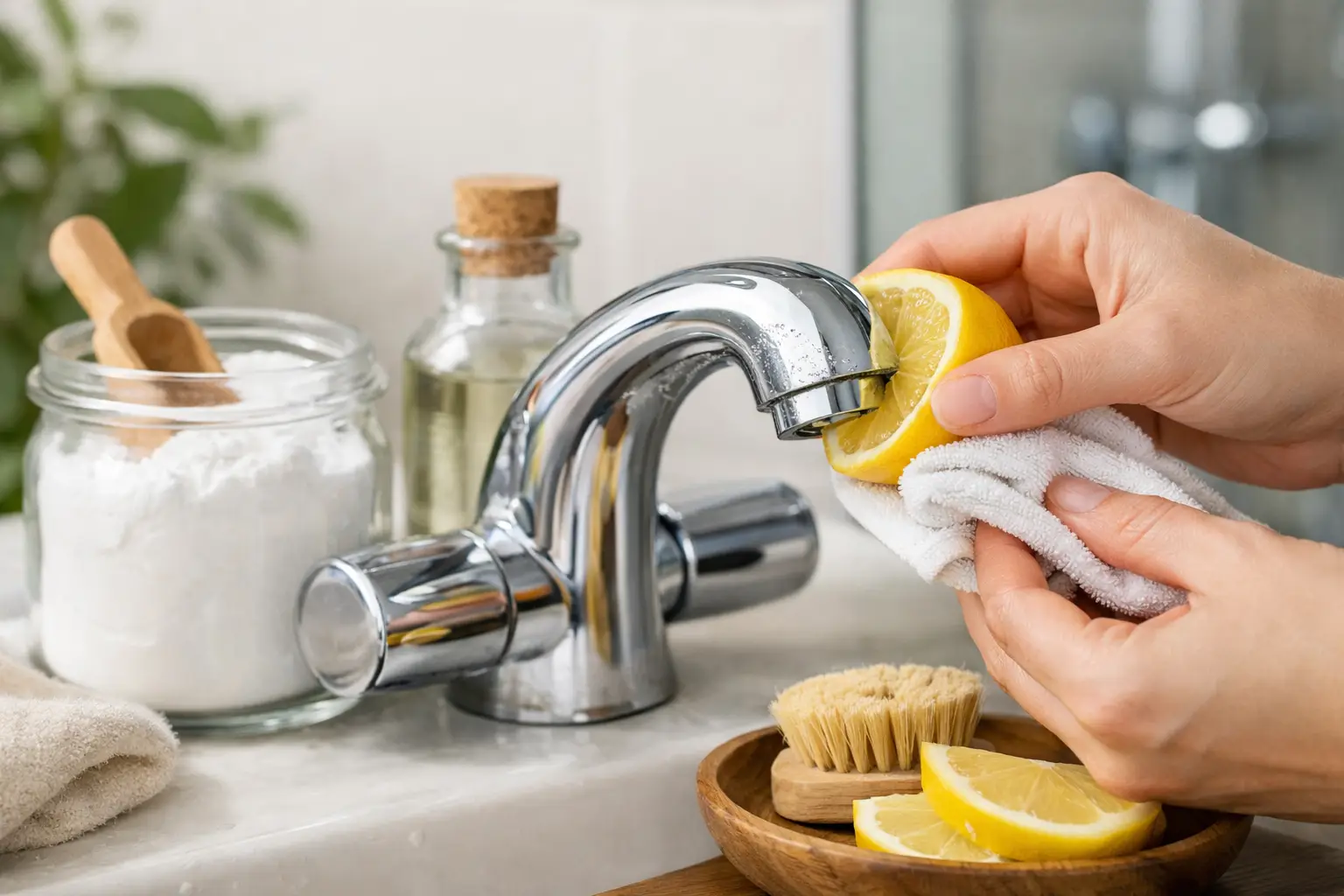
Mineral rings around faucets can make an otherwise clean bathroom or kitchen look neglected. Soak a cloth in vinegar, wrap it around the stained area, and leave it in place for 10 minutes. For narrow bases and handles, an old toothbrush can gently reach the crevices after soaking.
Rinse the fixture well and buff it dry with a microfiber cloth. This brings back shine without leaving streaks. Avoid steel wool, abrasive powders, and stiff brushes on chrome or brushed nickel, since tiny scratches can trap more buildup in the future.
A clogged showerhead needs a little more time. Fill a small plastic bag with enough vinegar to cover the spray nozzles, secure it around the showerhead, and soak it for 30 minutes to an hour. Remove the bag, run warm water through the showerhead, and gently brush the nozzles. Do not soak specialty, coated, or colored fixtures without checking the manufacturer’s care instructions first.
Tackle toilet bowl mineral rings with care
Toilet bowl stains may be white, brown, rust-colored, or gray depending on the minerals in the water. Start by pouring one to two cups of white vinegar into the bowl, making sure it reaches the ring. Let it sit for at least 30 minutes, then scrub with a toilet brush.
For a persistent ring, sprinkle baking soda over the damp area after the vinegar has had time to work. Scrub gently and flush. A pumice stone designed specifically for toilet cleaning can help with severe mineral buildup, but it should always be wet and used with very light pressure. Used incorrectly, it can scratch porcelain.
Never mix vinegar with bleach or any bleach-containing toilet product. Combining cleaning chemicals can create dangerous fumes. If a commercial cleaner was used recently, flush several times and allow time before switching to a vinegar-based method.
Restore tile and grout without harsh fumes
For sealed ceramic or porcelain tile, spray a vinegar-and-water solution onto hard-water spots and let it sit briefly. Wipe with a damp cloth, then dry the tile to prevent spotting. Do not let acidic solutions sit for long periods on grout, especially if it is older, damaged, or unsealed.
Grout often holds both mineral scale and soap residue. A paste made with baking soda and a small amount of water can be worked into the grout using a soft brush. Rinse thoroughly afterward. If discoloration is deep, widespread, or returns quickly, the issue may be worn grout or moisture behind the tile rather than a simple surface stain.
Professional grout cleaning can be the better choice when scrubbing no longer improves the appearance. It protects your time, reduces the risk of damaging delicate surfaces, and helps identify whether grout needs sealing or repair.
Keep stains from returning
Hard water cannot be wiped out of the local water supply with one cleaning session, but its effects can be managed. After showers, use a squeegee on glass and wipe fixtures dry. In kitchens, dry the faucet and sink edges after doing dishes. These small habits prevent minerals from drying in place.
For busy households, choose one bathroom cleaning day each week and treat early signs of buildup before they turn into thick scale. A regular, non-toxic cleaning routine is easier on surfaces and easier on the people sharing your home.
When hard water stains have taken over the shower, tile, grout, or fixtures, asking for professional help is a practical form of care, not a shortcut. Natures Cleaning Services helps homes and workplaces maintain a healthier clean with thoughtful methods that respect families, pets, and New Mexico’s environment. A clean space should feel fresh, comfortable, and safe every time you walk in.