How Often Should Offices Be Cleaned? A Guide
A dusty reception desk is rarely just a cosmetic problem. It shapes a client’s first impression, contributes to poorer indoor air quality, and signals to employees that their work environment may not be a priority. So, how often should offices be cleaned? The right answer depends on how many people use the space, what type of work happens there, and which areas collect the most germs, dust, and debris.
For most professional offices, cleaning should happen on a regular weekly schedule, with high-touch surfaces addressed every day. Offices with steady public traffic, food service, children, patients, or hands-on work often need more frequent attention. A customized plan protects the health of your staff and visitors without paying for service your space does not truly need.
How Often Should Offices Be Cleaned?
A small office with a handful of employees and little foot traffic may stay presentable with professional cleaning once a week, plus simple daily upkeep from the team. A larger workplace, busy car dealership, school, dental office, or medical clinic may need cleaning three to five times per week, or even daily.
Frequency is not only about appearances. Shared keyboards, door handles, breakroom counters, restrooms, and waiting areas are touched repeatedly throughout the day. These surfaces deserve consistent disinfection, especially during cold and flu season or when illness is moving through the workplace.
In Albuquerque and surrounding communities, dry conditions and wind can also bring fine dust into entryways, lobbies, and work areas faster than many business owners expect. If floors look dusty a day or two after cleaning, it is usually a sign that the schedule, entryway protection, or both need adjustment.
A practical baseline for most workplaces
Rather than treating every task the same, separate daily upkeep from deeper recurring work. This approach keeps your office healthy and welcoming while using cleaning time wisely.
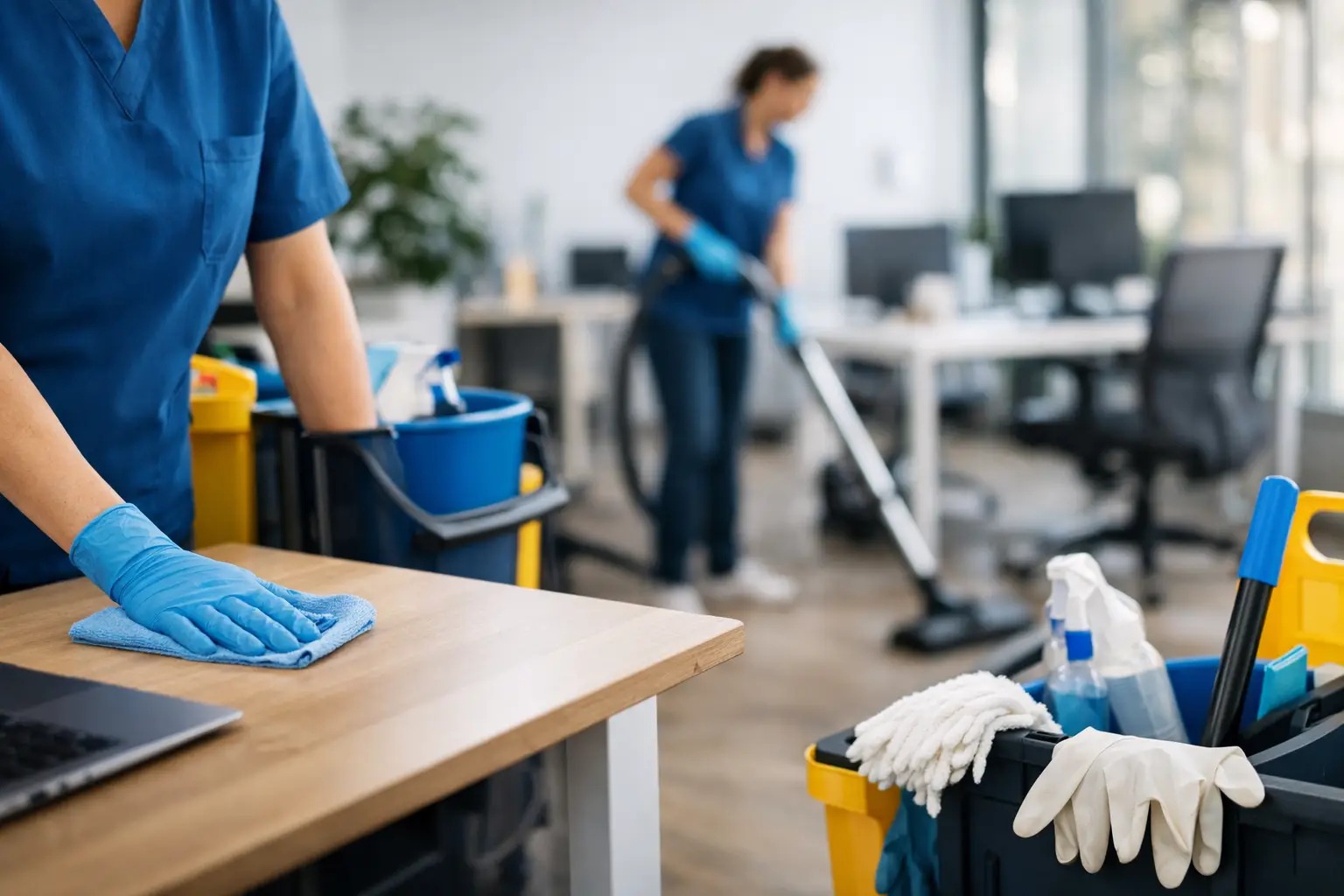
- Daily: Empty trash, clean and disinfect high-touch points, wipe breakroom surfaces, restock restroom supplies, and spot-clean spills.
- Two to three times weekly: Vacuum or sweep busy walkways, mop hard floors, clean restrooms thoroughly, and refresh reception and common areas.
- Weekly: Dust workstations and ledges, clean glass at entrances, wipe exterior surfaces of shared equipment, and clean breakrooms in more detail.
- Monthly or quarterly: Deep-clean floors, baseboards, vents, upholstery, interior glass, grout, and areas behind or beneath furniture.
This is a starting point, not a rulebook. If employees eat at their desks, clients regularly visit, or your office has multiple restrooms, daily or near-daily cleaning will likely provide better results. If your team works remotely most of the week, a lighter schedule may be appropriate.
What Determines Your Office Cleaning Schedule?
The number of people in the building matters, but traffic patterns matter even more. Ten employees who work quietly at separate desks create a different cleaning need than ten employees who share a reception area with dozens of visitors each day.
Your industry and level of public contact
Healthcare, dental, childcare, and school settings need a higher level of cleaning because they serve people who may be more vulnerable to illness and because surfaces are shared so often. These environments should follow their applicable sanitation requirements and maintain a consistent professional cleaning schedule.
Customer-facing businesses also benefit from frequent service. A clean showroom floor, streak-free glass, and fresh-smelling restroom reassure customers that you take care with the details. For professional offices, clean common areas can make meetings feel more polished and help employees feel comfortable inviting clients in.
Food, restrooms, and shared spaces
Breakrooms are one of the quickest places for an office to become unpleasant. Crumbs, coffee spills, microwaves, sinks, and shared refrigerator handles create mess and odor quickly. If your staff uses a communal kitchen daily, it should receive daily attention, with a deeper cleaning at least once each week.
Restrooms should be checked daily in nearly every workplace, even when a professional team cleans less often. Supplies need replenishing, trash needs removal, and visible soil or spills should be handled promptly. A restroom that is technically cleaned once a week but looks neglected by Wednesday is not meeting the needs of the building.
Floors and outdoor conditions
Floor care often determines whether an office looks clean from a distance. Entrance mats can capture grit and help reduce wear, but they need regular vacuuming and cleaning to work properly. High-traffic carpet, tile, and vinyl floors may need attention several times each week, while private offices can usually be maintained less frequently.
Deep floor care should be scheduled before soil becomes embedded. Waiting until grout is darkened or carpet traffic lanes are obvious can make restoration more difficult and may shorten the life of expensive flooring.
Signs Your Current Schedule Is Too Infrequent
You do not need a formal inspection to recognize that a cleaning plan is falling behind. Lingering odors, overflowing trash, fingerprints on glass, dusty corners, and complaints about restroom supplies are all clear indicators. So are recurring employee sick days, although cleaning is only one part of a workplace health plan.
Pay attention to the time between service visits. If the office looks messy within a day or two, the problem is not that cleaning is ineffective. It usually means cleaning needs to occur more often or focus more heavily on the zones receiving the most use.
A schedule may also be too infrequent if employees are spending meaningful work time wiping down shared areas, taking out trash, or handling restroom issues. Asking staff to help with small personal messes is reasonable. Making them responsible for ongoing janitorial work can create frustration and pull attention away from their actual jobs.
Why Safer Cleaning Products Matter at Any Frequency
More cleaning should not mean more harsh chemical exposure. Strong fragrances and chemical-heavy products can be uncomfortable for employees, visitors, people with sensitivities, and those managing asthma or allergies. They can also leave behind residues on desks, counters, and other surfaces touched throughout the day.
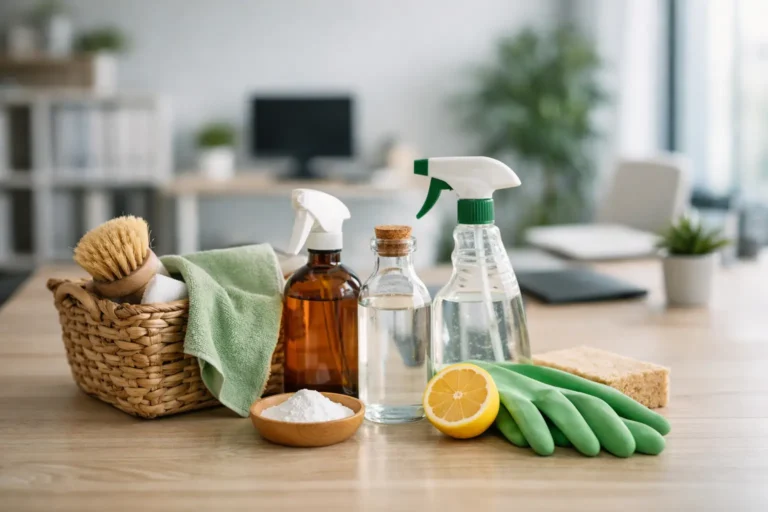
Plant-based, non-toxic products offer a more thoughtful way to maintain a clean office. When used correctly, they can deliver professional results while supporting a healthier indoor environment for employees, clients, and cleaning teams. This is especially valuable in offices where people spend eight or more hours each day.
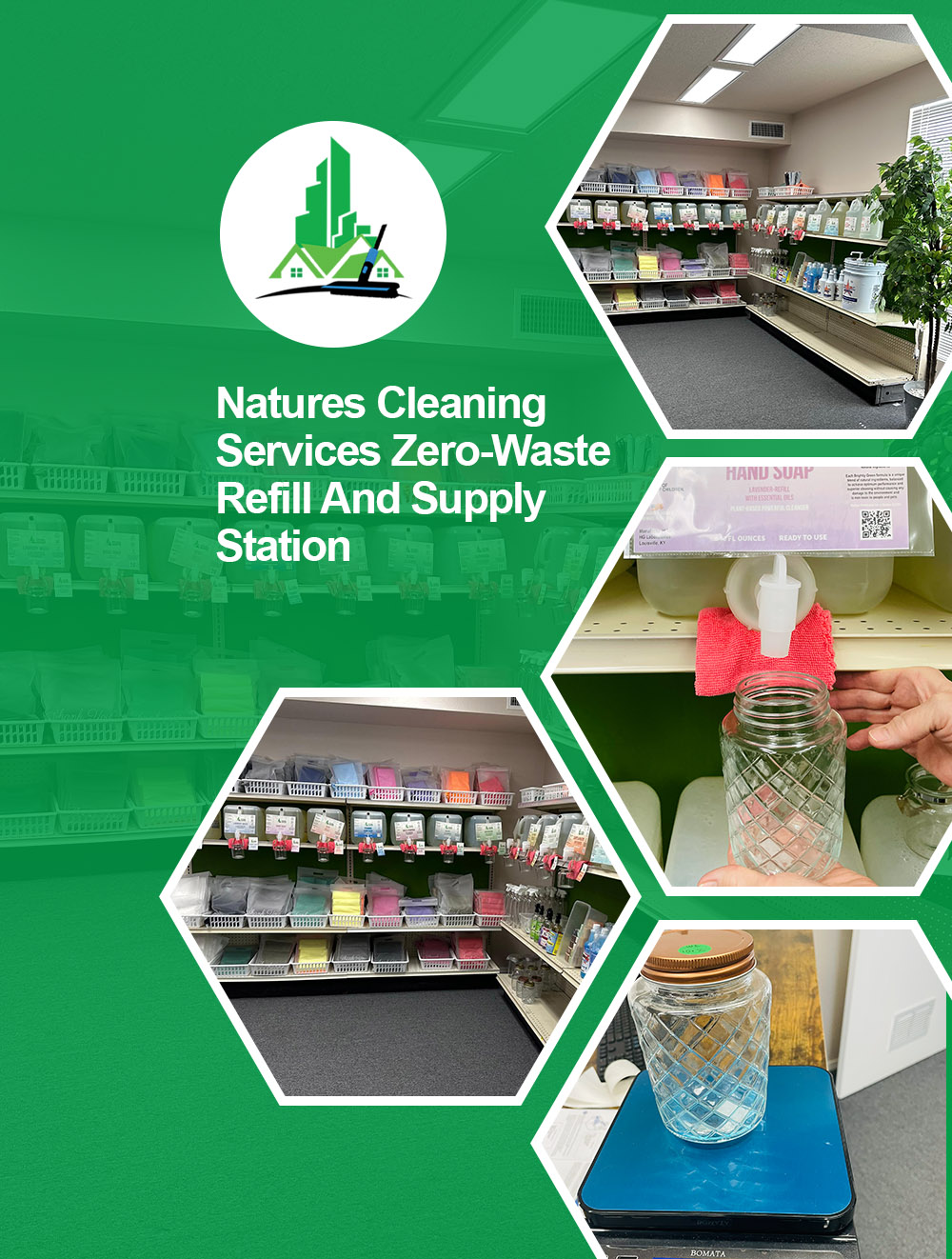
A responsible cleaning plan also considers waste. Refillable supplies, reusable microfiber materials, proper dilution, and targeted cleaning methods can reduce unnecessary plastic and product use without compromising cleanliness. A clean workplace should support the people inside it and reflect care for New Mexico’s natural environment.
Build a Schedule That Can Change With Your Business
The best office cleaning schedule is reviewed, not set once and forgotten. Seasonal dust, a growing team, new office hours, a flu outbreak, or an upcoming client event can all justify temporary changes. Some businesses add an extra weekly visit during busy seasons, then return to a lighter schedule when traffic slows.
Start by identifying your busiest spaces, the surfaces people touch most, and the areas that cause complaints when they are overlooked. Then choose a dependable cleaning partner that can tailor service around your building, business hours, and health priorities. Natures Cleaning Services helps businesses create eco-conscious commercial cleaning plans that keep workspaces professional, comfortable, and cared for.
Your office does not need to smell like harsh chemicals to feel truly clean. It needs a schedule that keeps pace with the people who rely on it every day.